Feeds:
Posts
Comments

Posts Tagged ‘printmaking workshops’

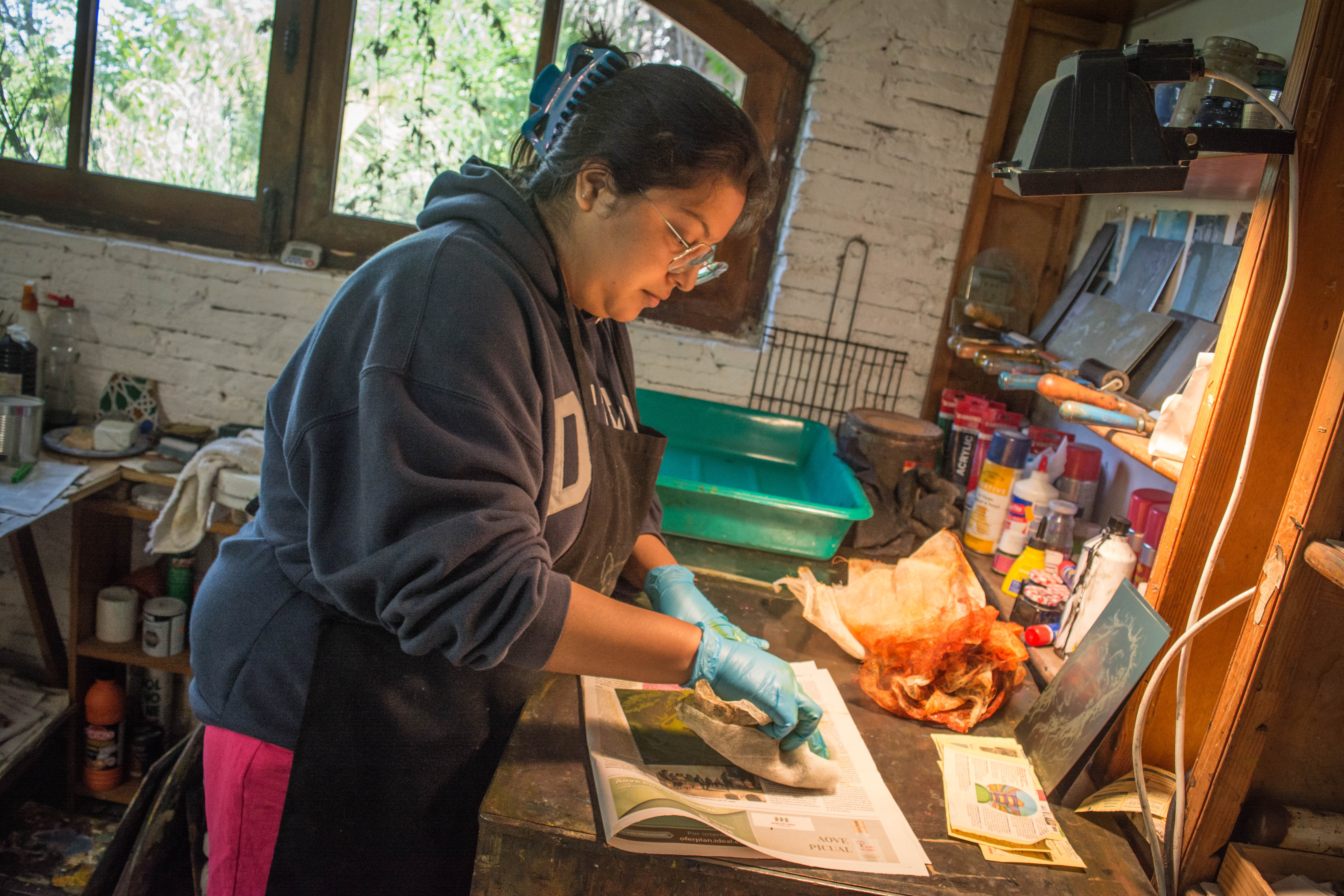
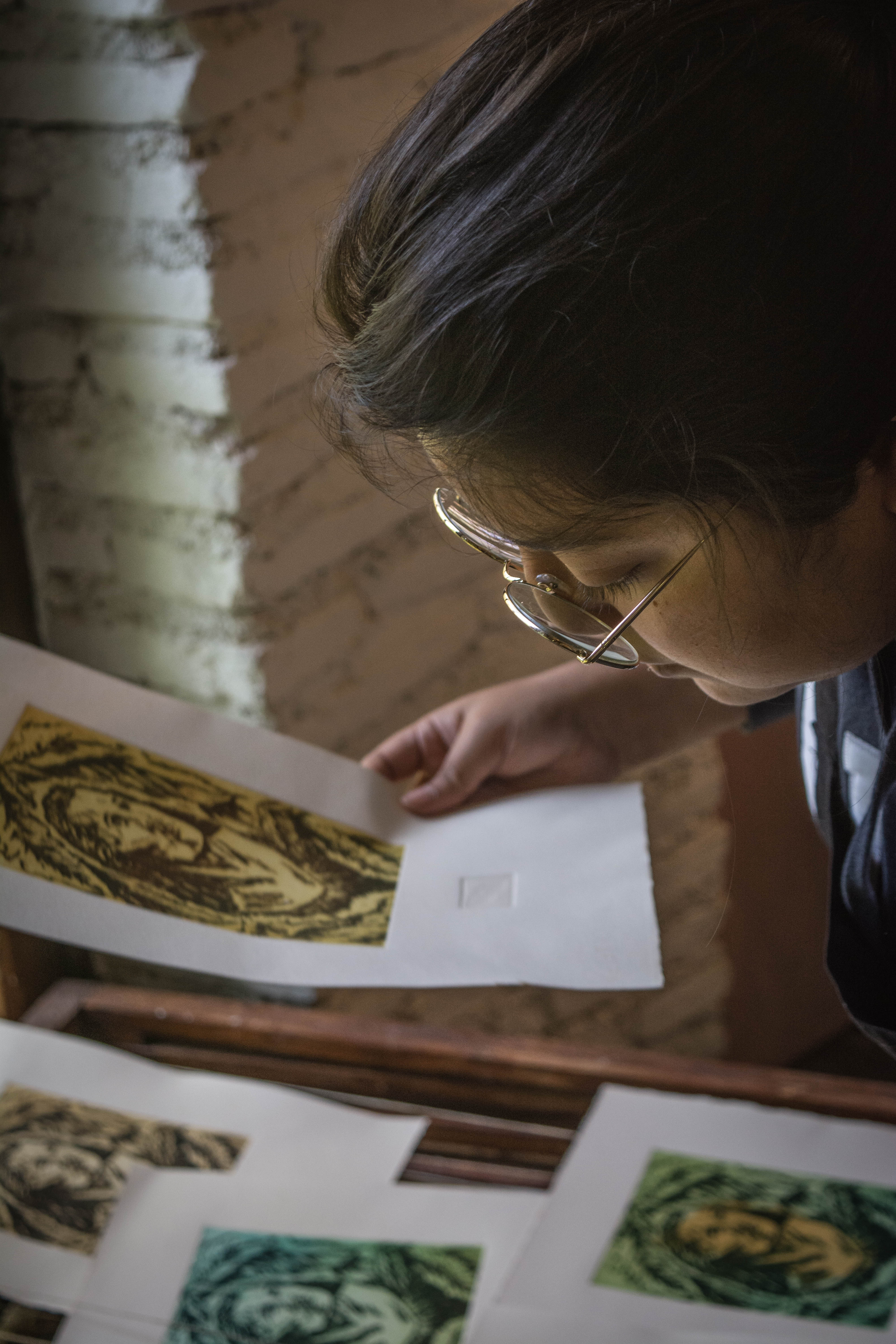
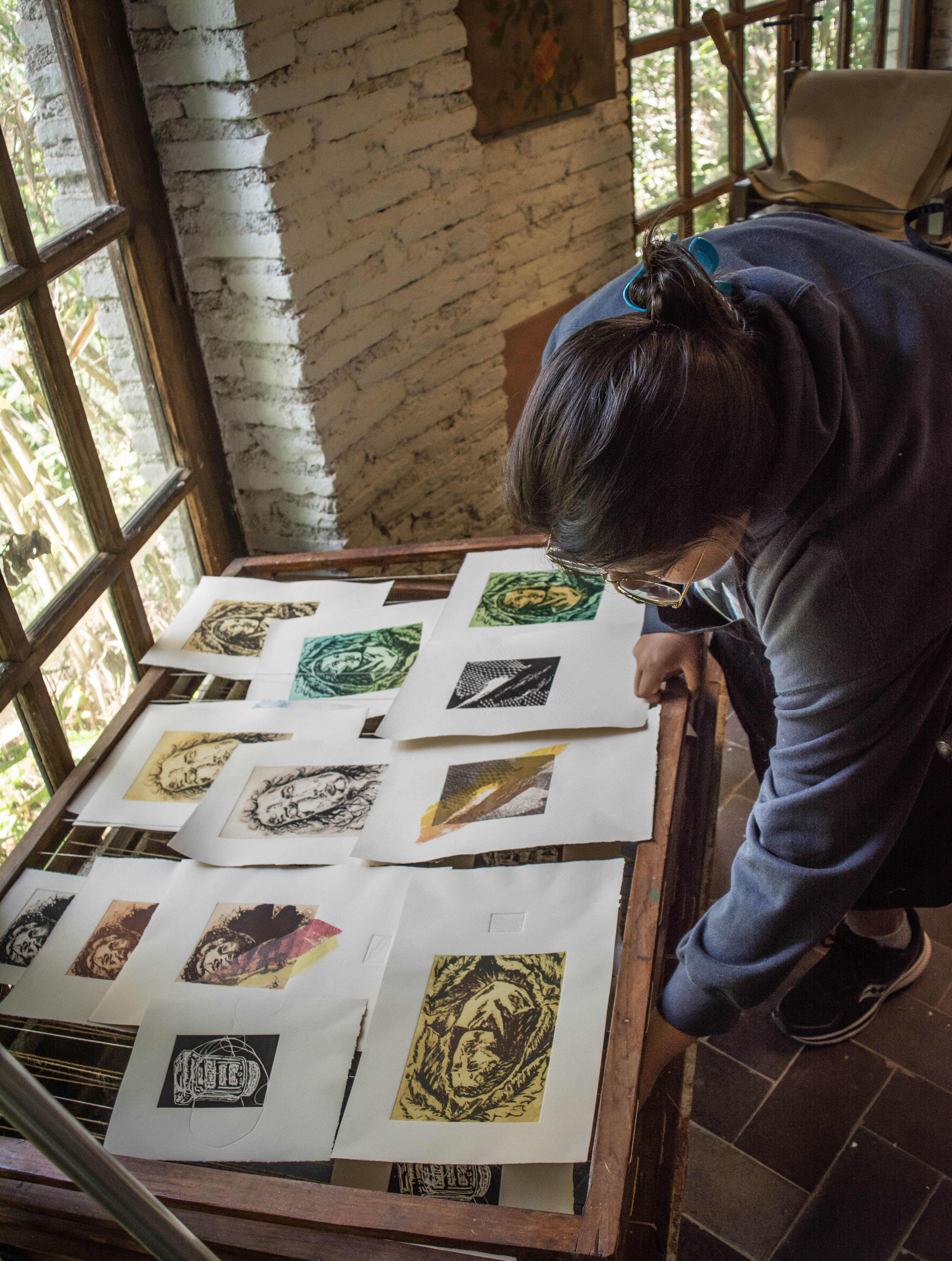
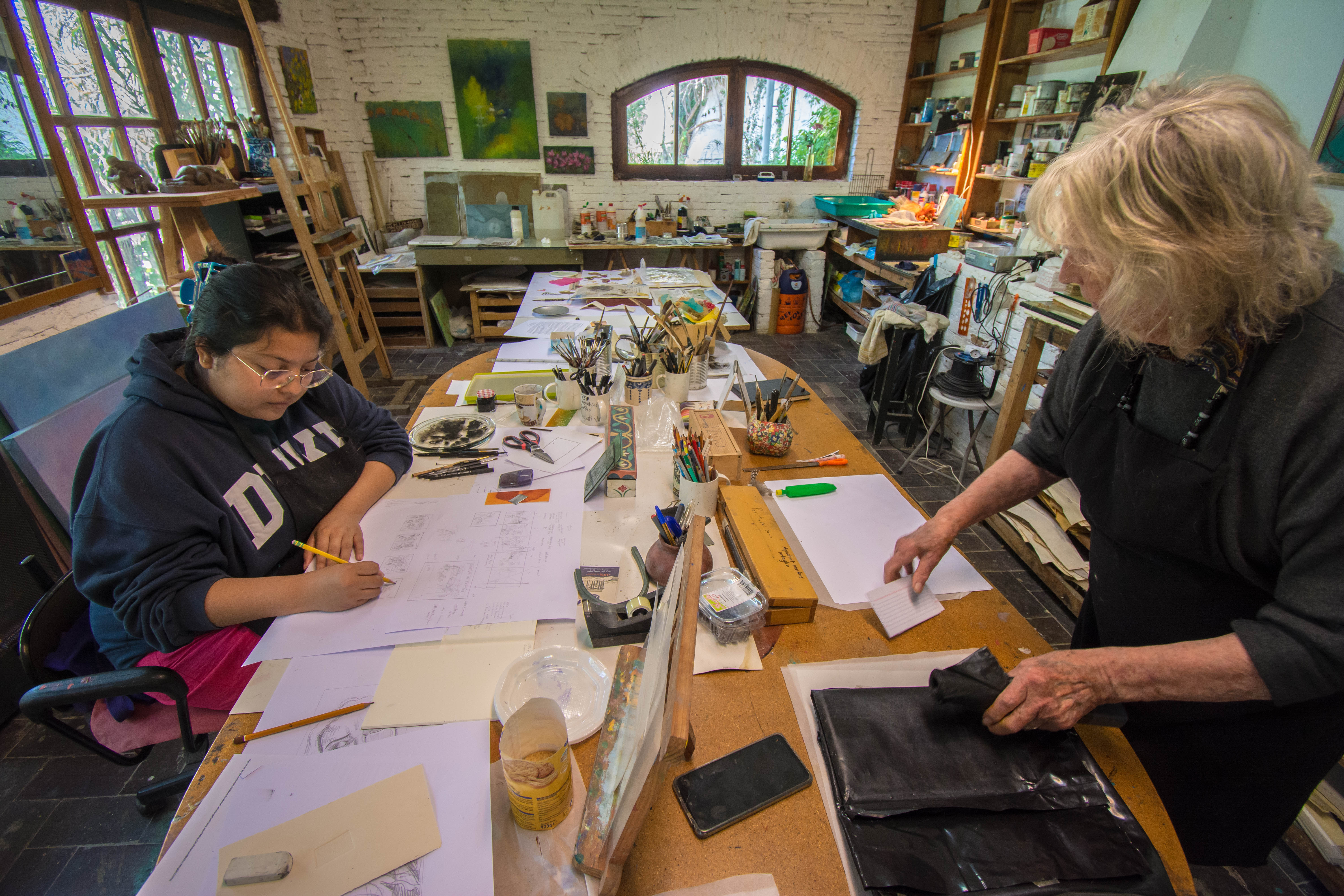
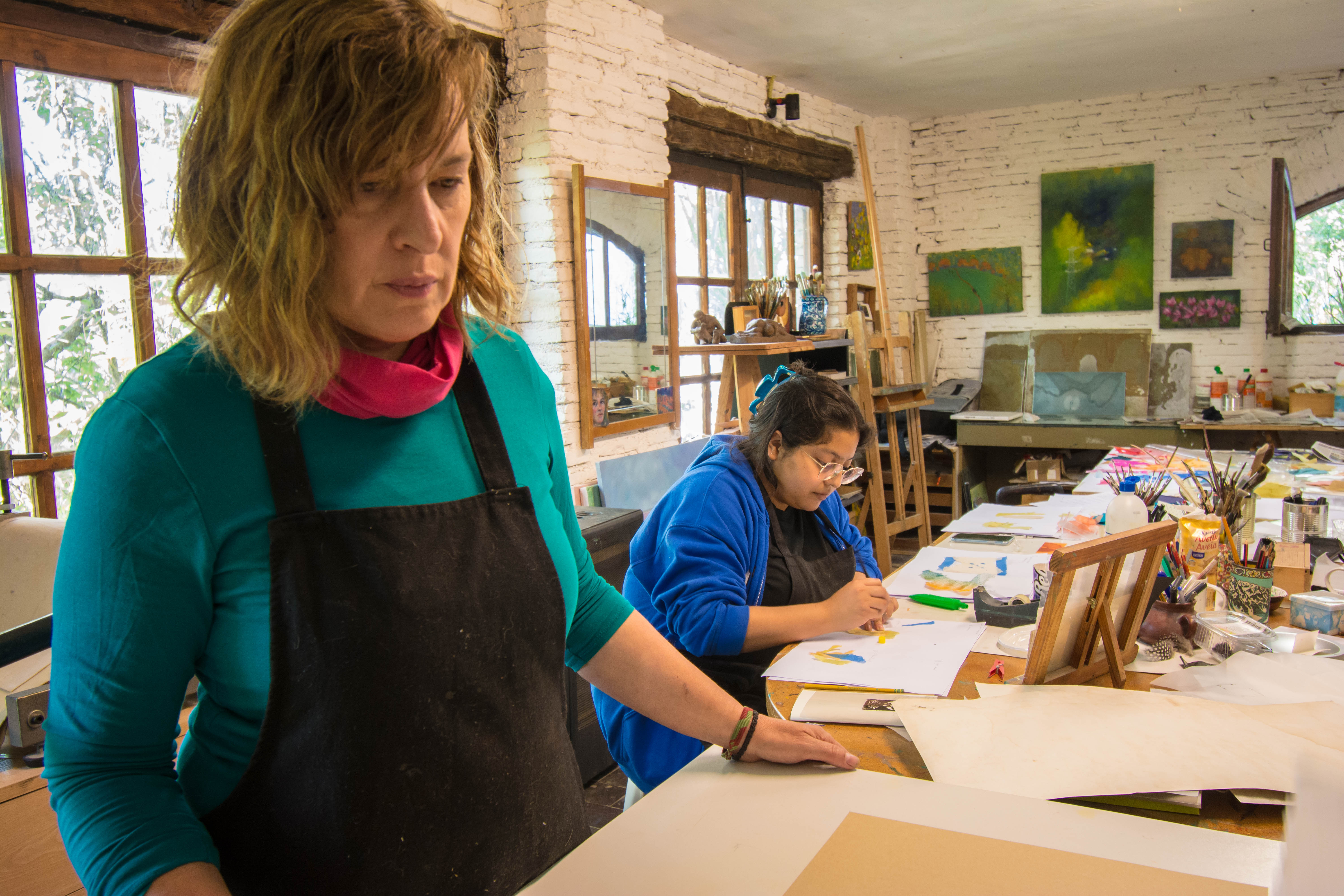
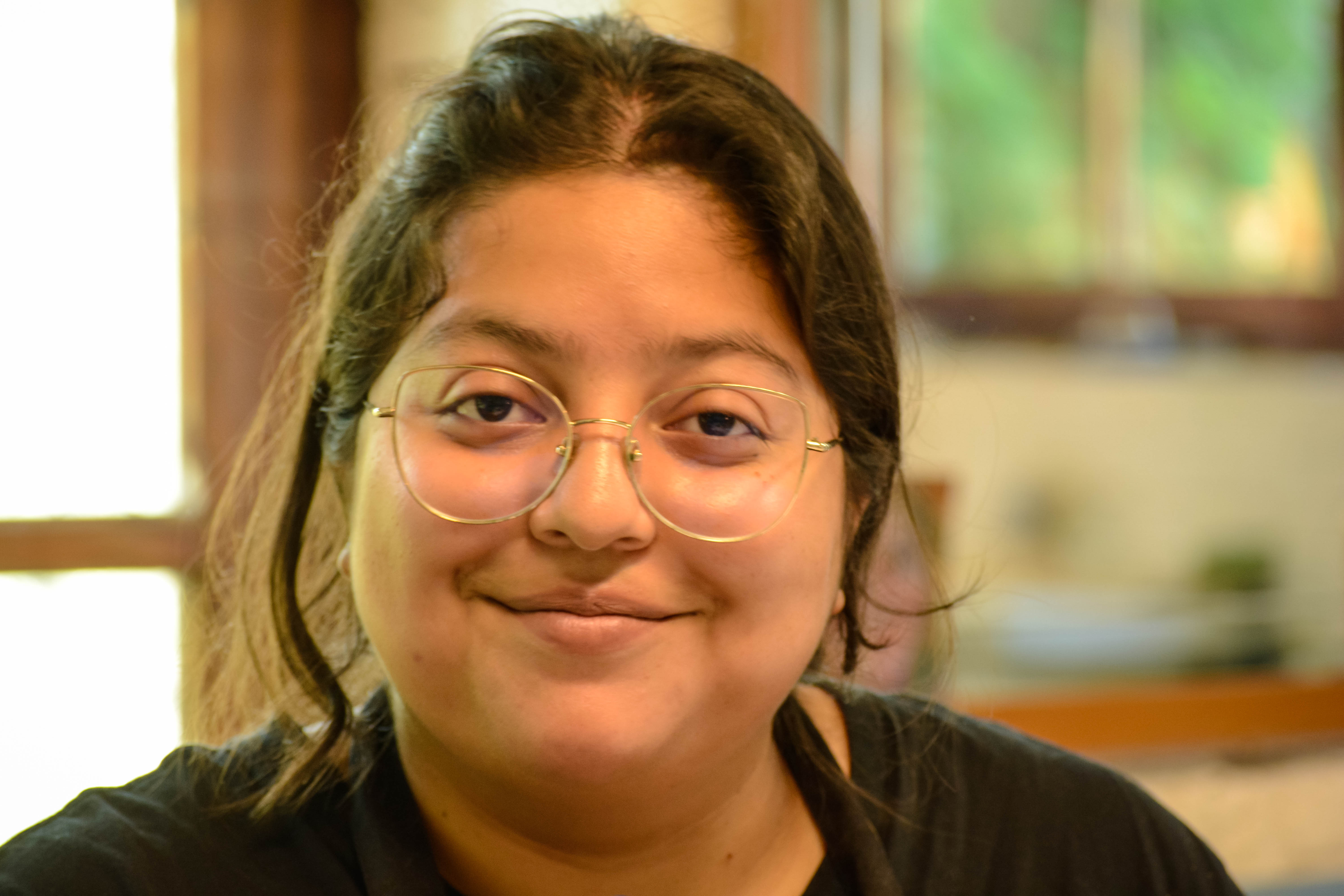
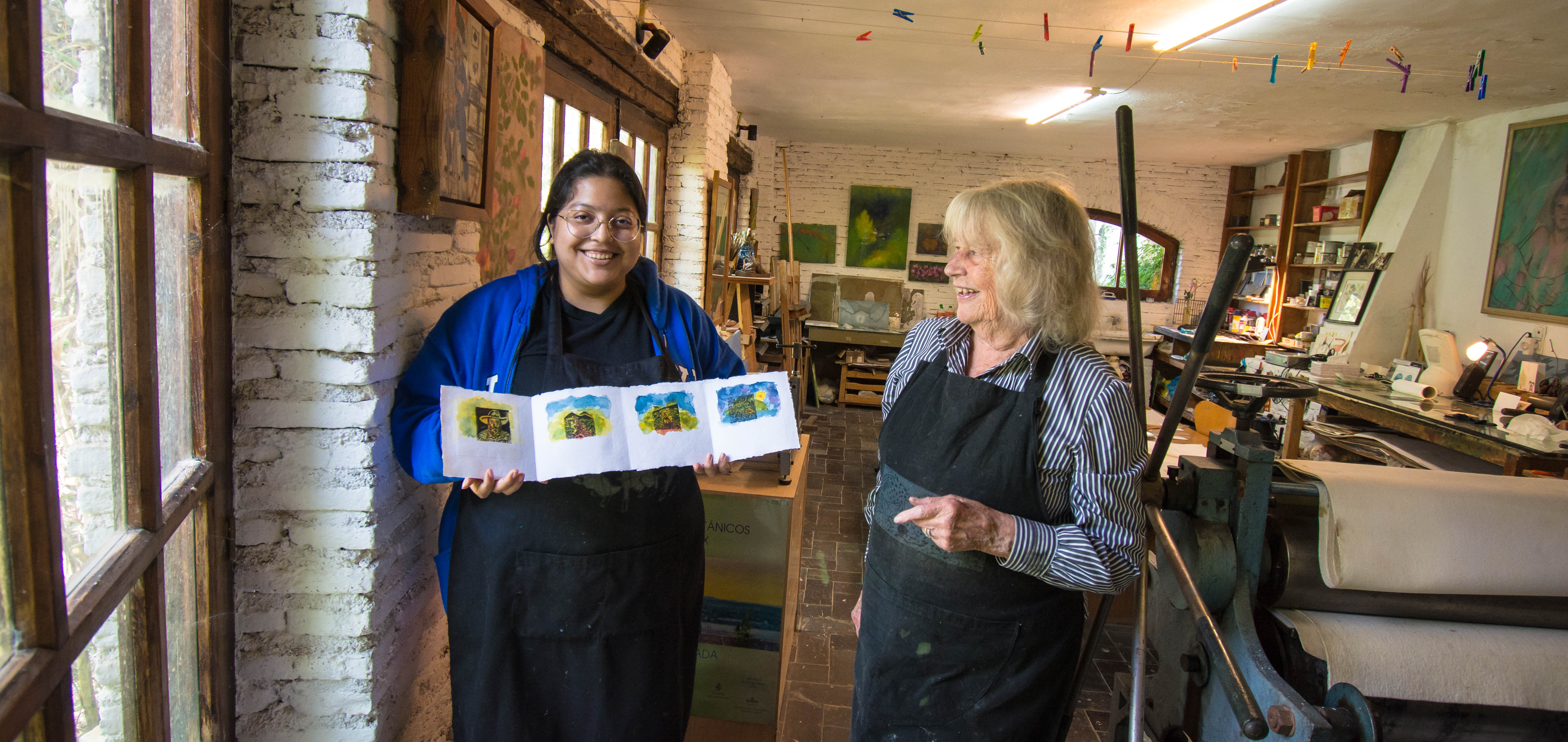
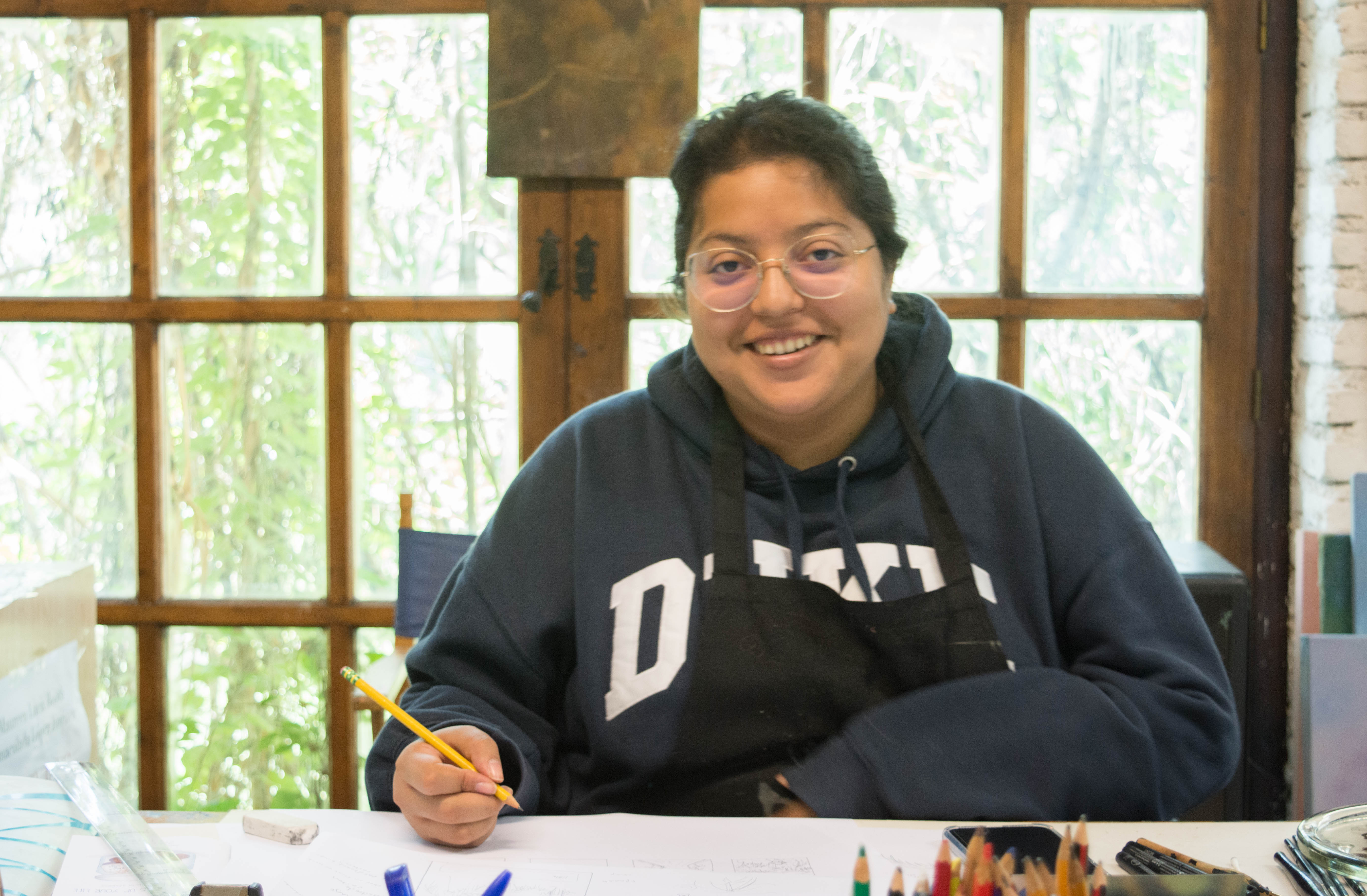
It’s almost as if it weren’t work at all. In theory, I’m not working any more. But printmakers and other artists keep popping up. And they are unlike “normal” people. They’re special, more interesting. They have more and different aspirations. The Spanish word is better: “inquietudes.” The young woman who has been here for the past two weeks is a perfect example. She has just graduated from a high-class American university with a dual major in Visual Arts and Cultural Anthropology. But she had virtually no experience in printmaking. We had to start from zero.

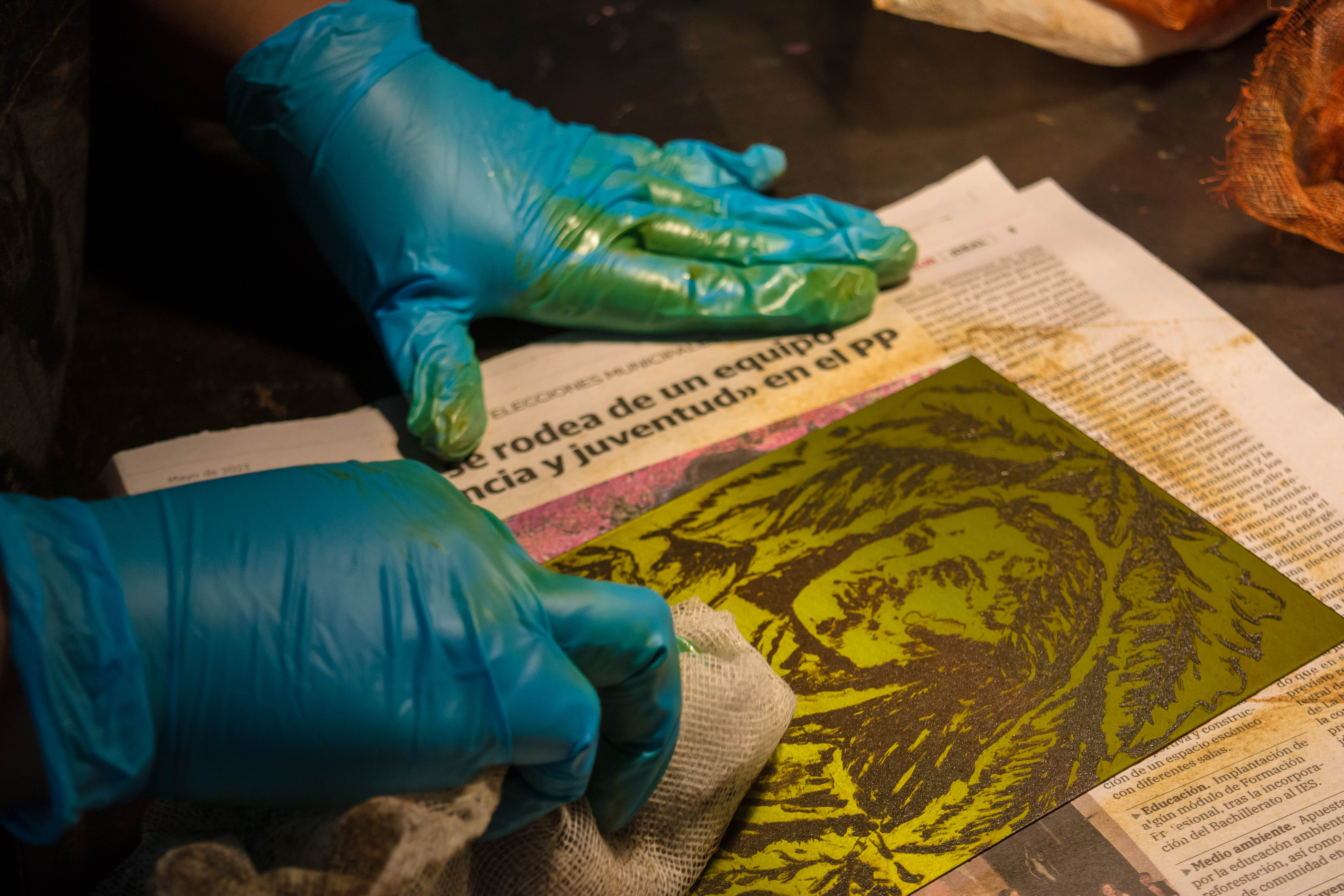
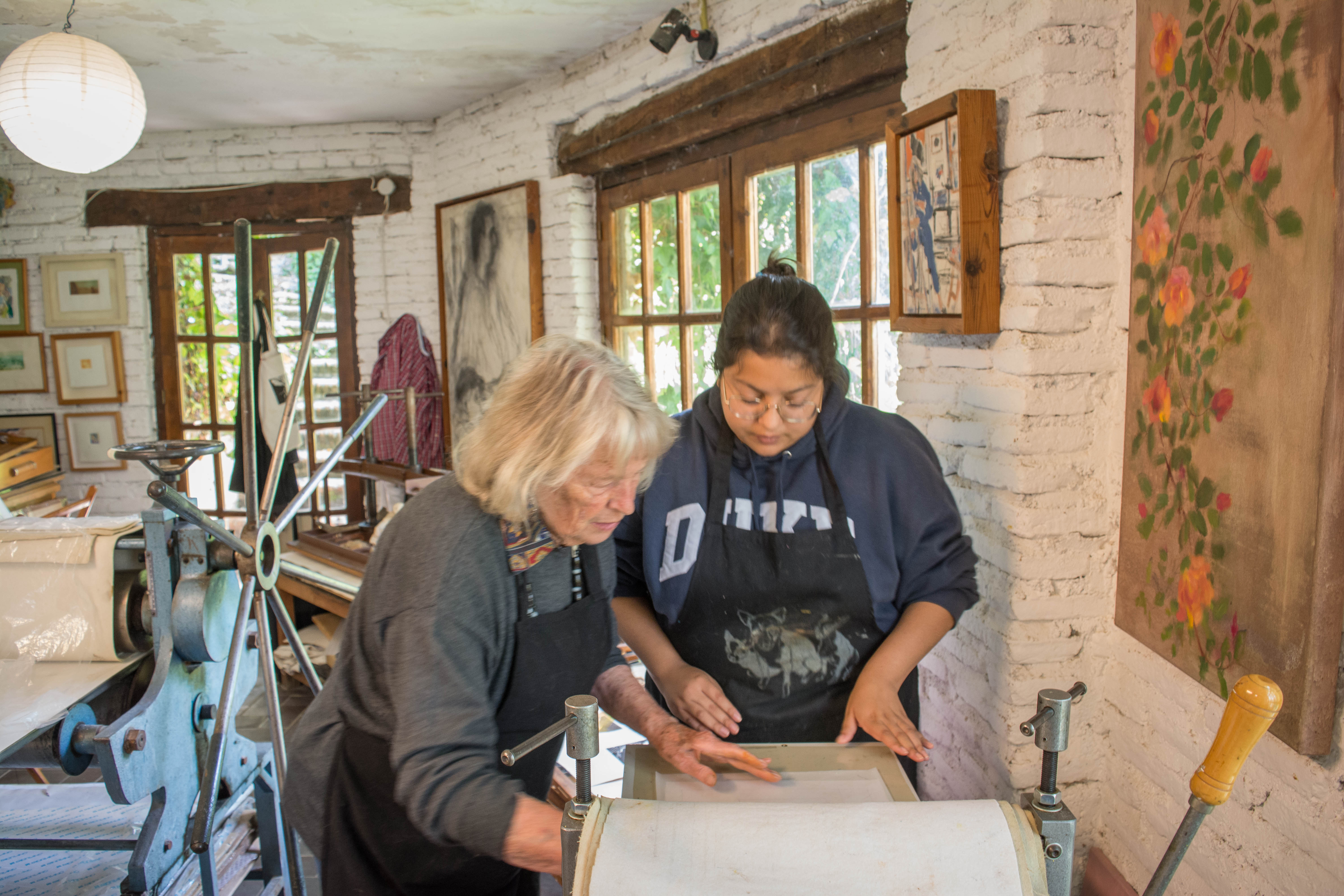
That’s not complicated. You just start at the beginning—preparing a plate—and continue through the basics. With luck, in a couple of weeks, the budding printmaker has a rough idea of making a print in various techniques and printing it in various ways. I saw a flutter of pigeons bouncing on a branch of one of our cypress trees the other day, and I stopped to try to decipher what was happening. Finally, I got the picture. It was complicated by the fact that baby pigeons, when the reach the age of leaving the nest, are roughly the same size as their mother. What I was looking at was a mother pigeon trying to get two of her offspring to leave that branch and go face the world.

That’s where my young printmaker was last week. But she was atypical from the beginning. Her plane landed in Málaga on a Sunday morning and she showed up at our house at midday after a long series of flights starting from New Orleans.  It turns out that she’s from Louisiana but she was offered a scholarship to Duke University in Durham, North Carolina. Mike, who is cheeky, said, “That’s an excellent school. What made them go all the way to Louisiana to find you? Are you brilliant, or do you just work really hard?”

“Both,” she replied matter of factly. We weren’t in a hurry that Sunday afternoon, so Rebekah had time to tell us a bit of her story. She was born in Louisiana after her family emigrated there from their pueblo in Northern Honduras. There her grandfather—and by extension her whole family—grew everything and was self sufficient, until a giant American fruit company absorbed their fincas. Instead of living off the land, the children of the family grew up to become exploited workers on pineapple plantations. “What a life your grandfather led,” I noted casually. “Is he still alive?”

“No,” said Rebekah, “He died of a heart attack, a sequel brought on by a hit-and-run incident some years earlier with a Standard Fruit Company bulldozer. It was razing fruit trees in order to open up a road across what had been his former property.”

“What a story,” I said.

“Yes,” replied Rebekah,” I hope to write it someday.”

“It would make a wonderful artist’s book,” I said, entirely spontaneously.

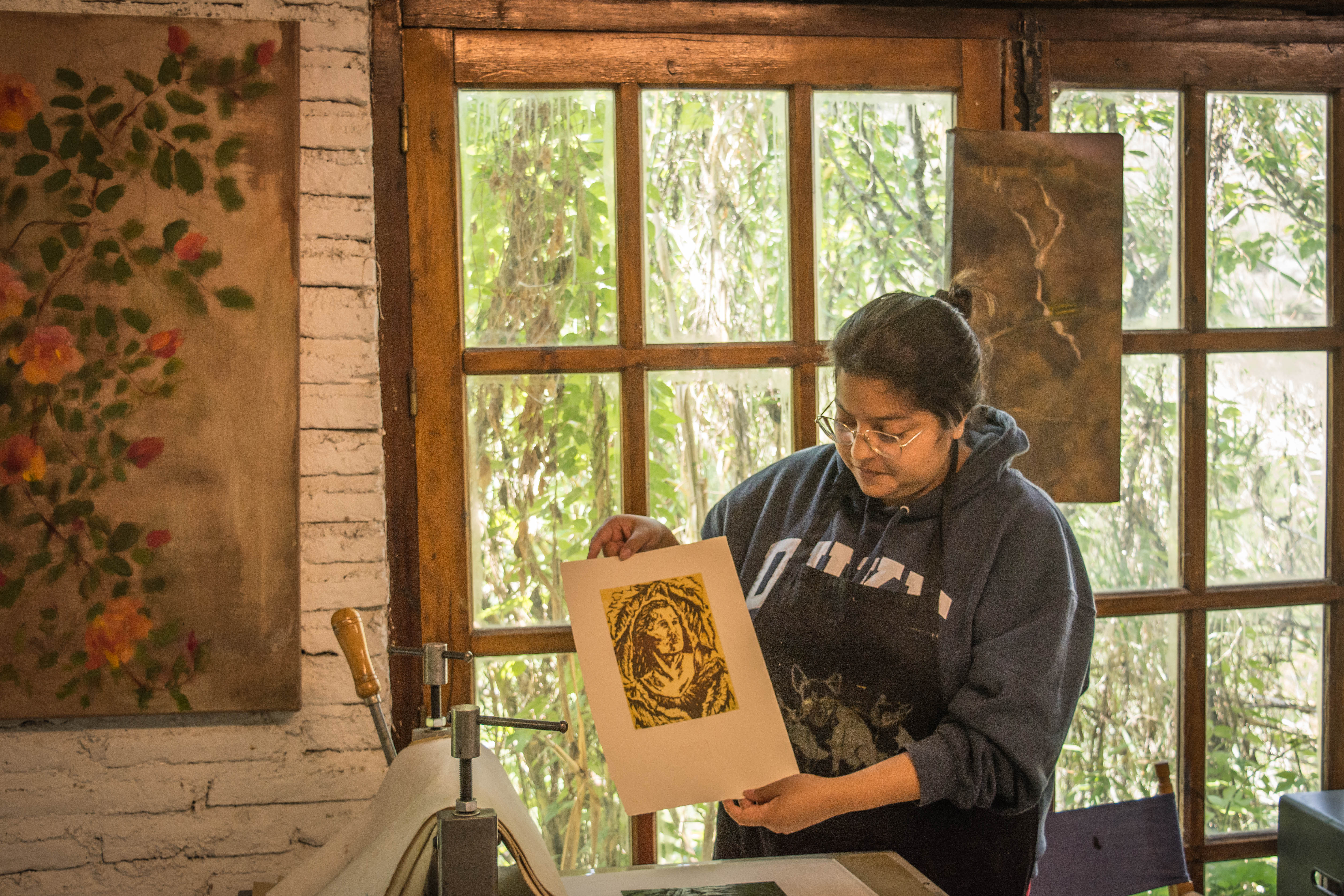
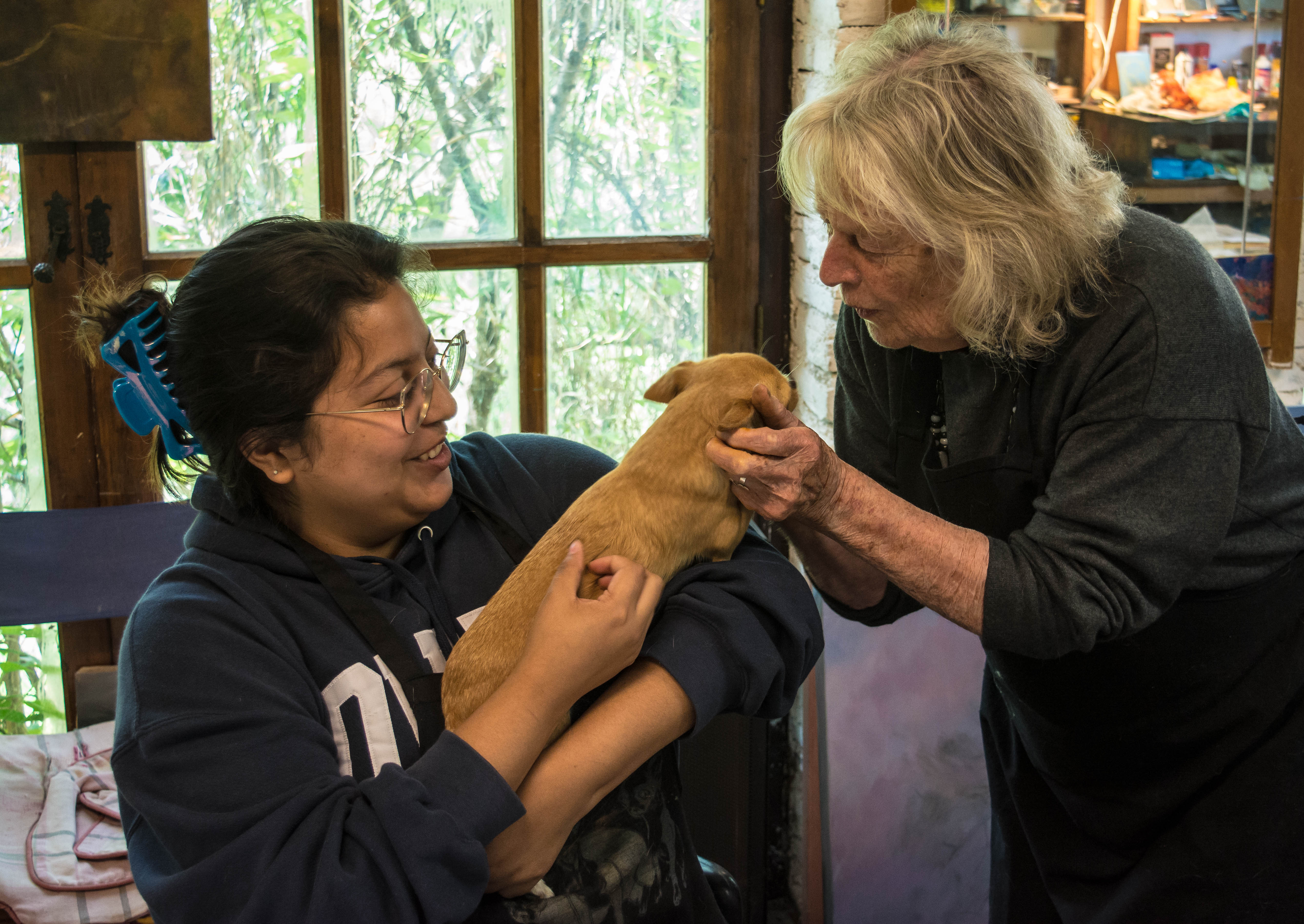
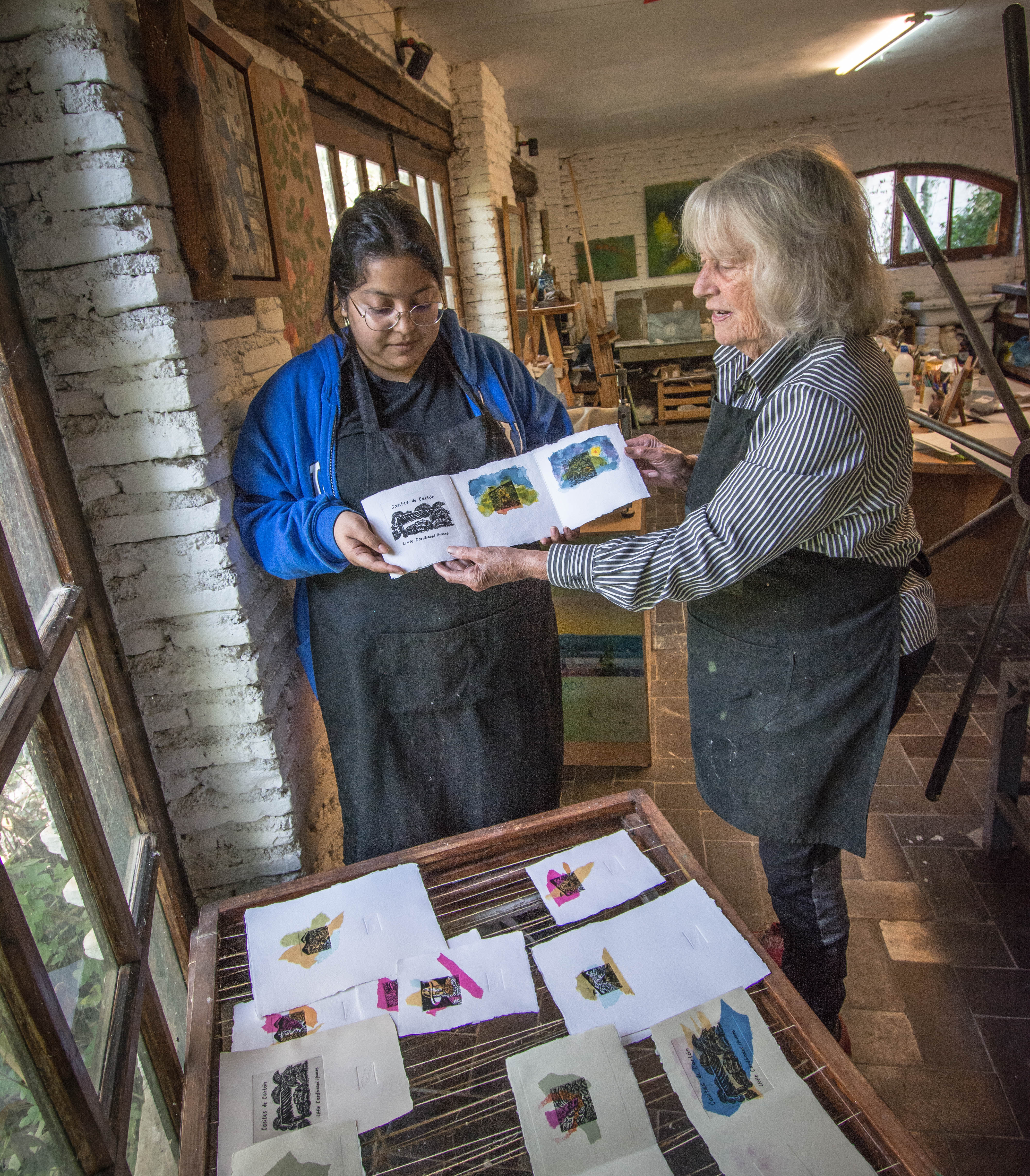
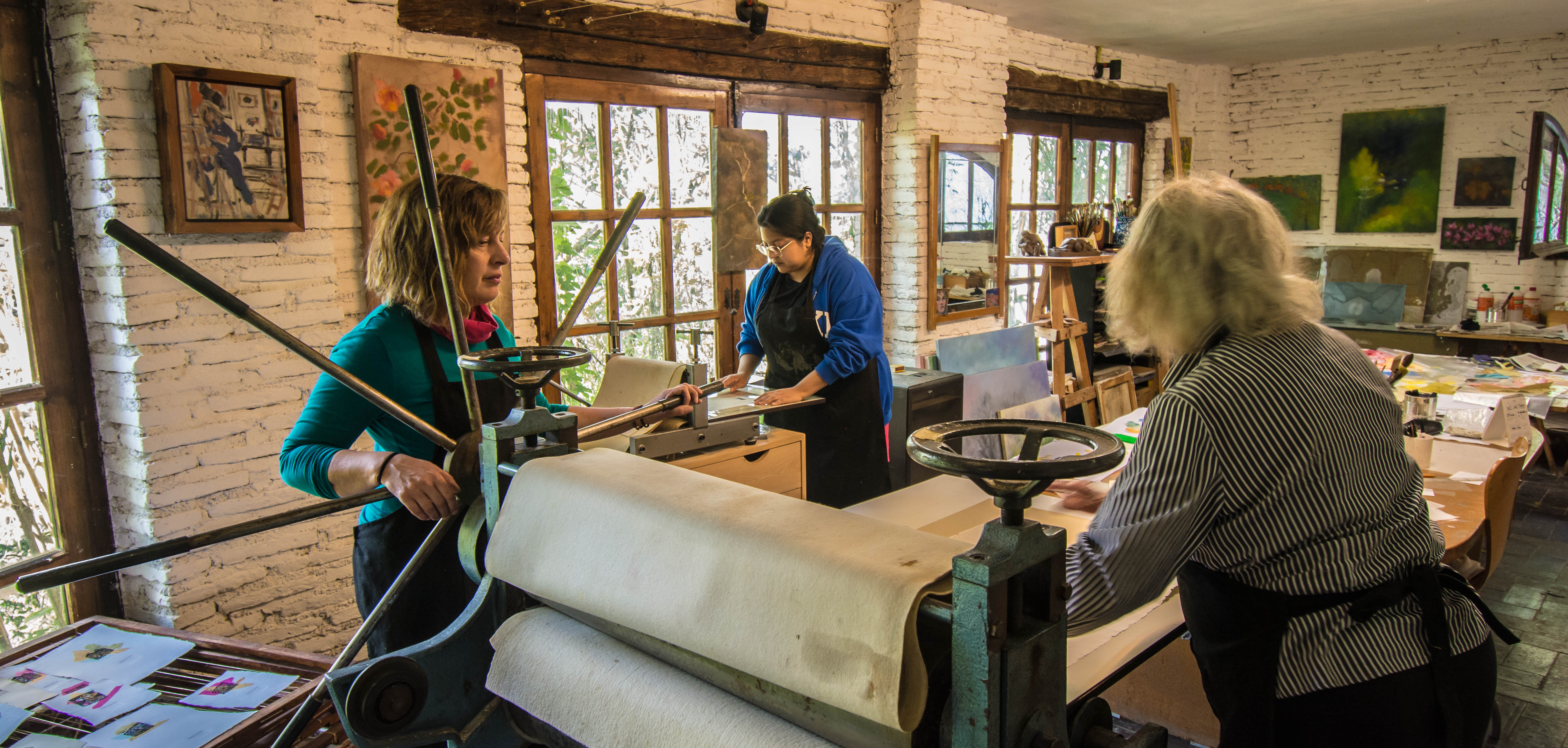
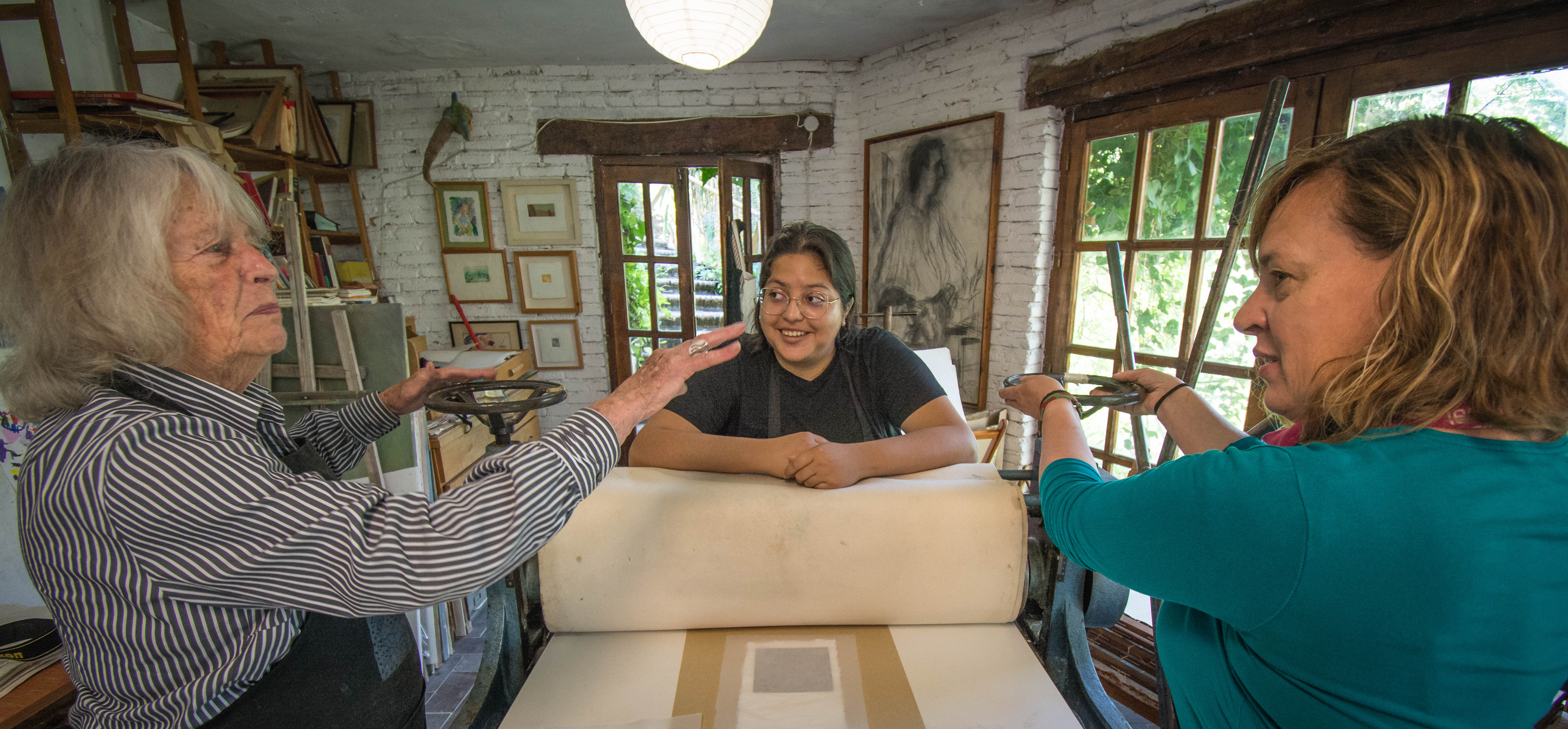
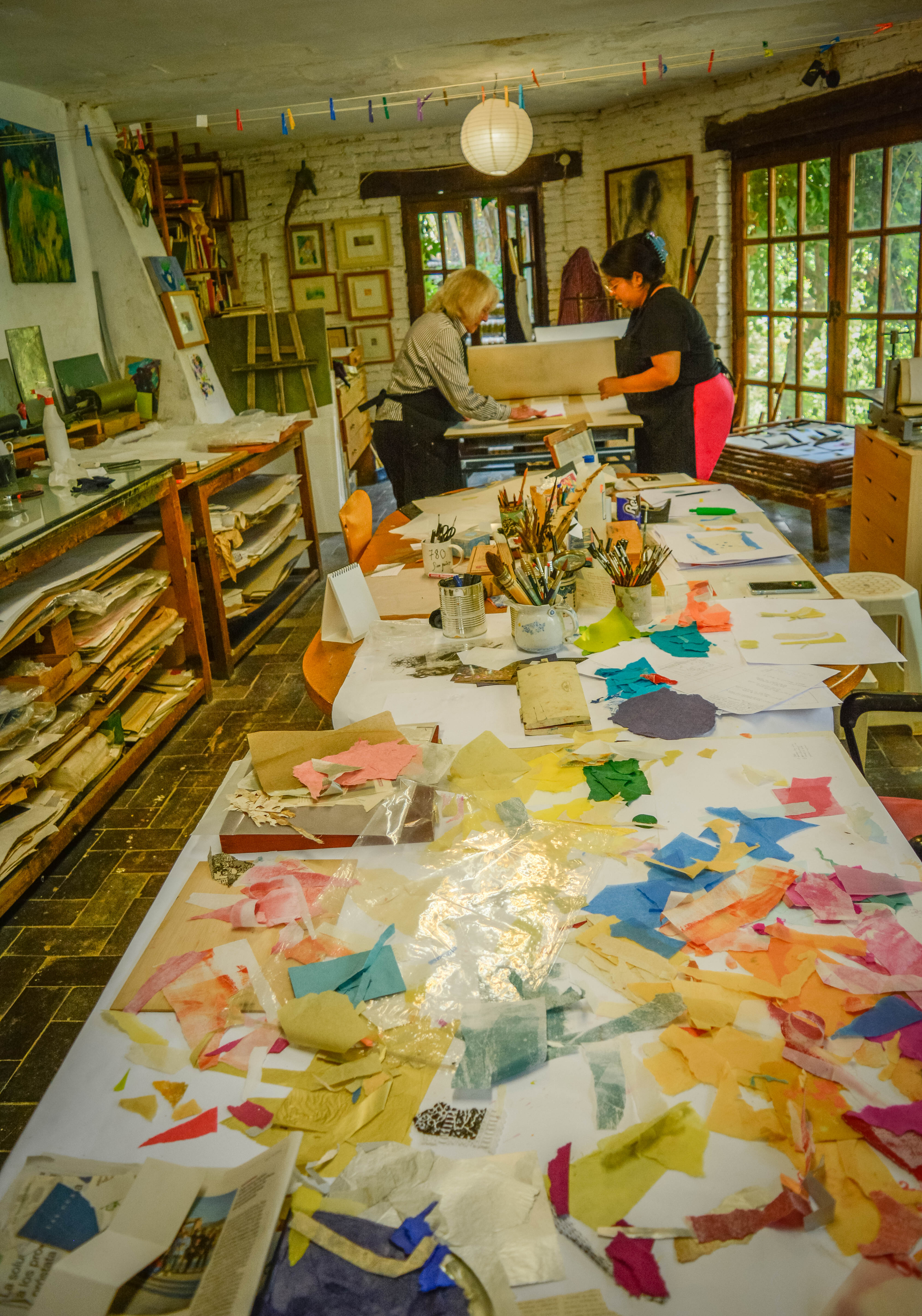
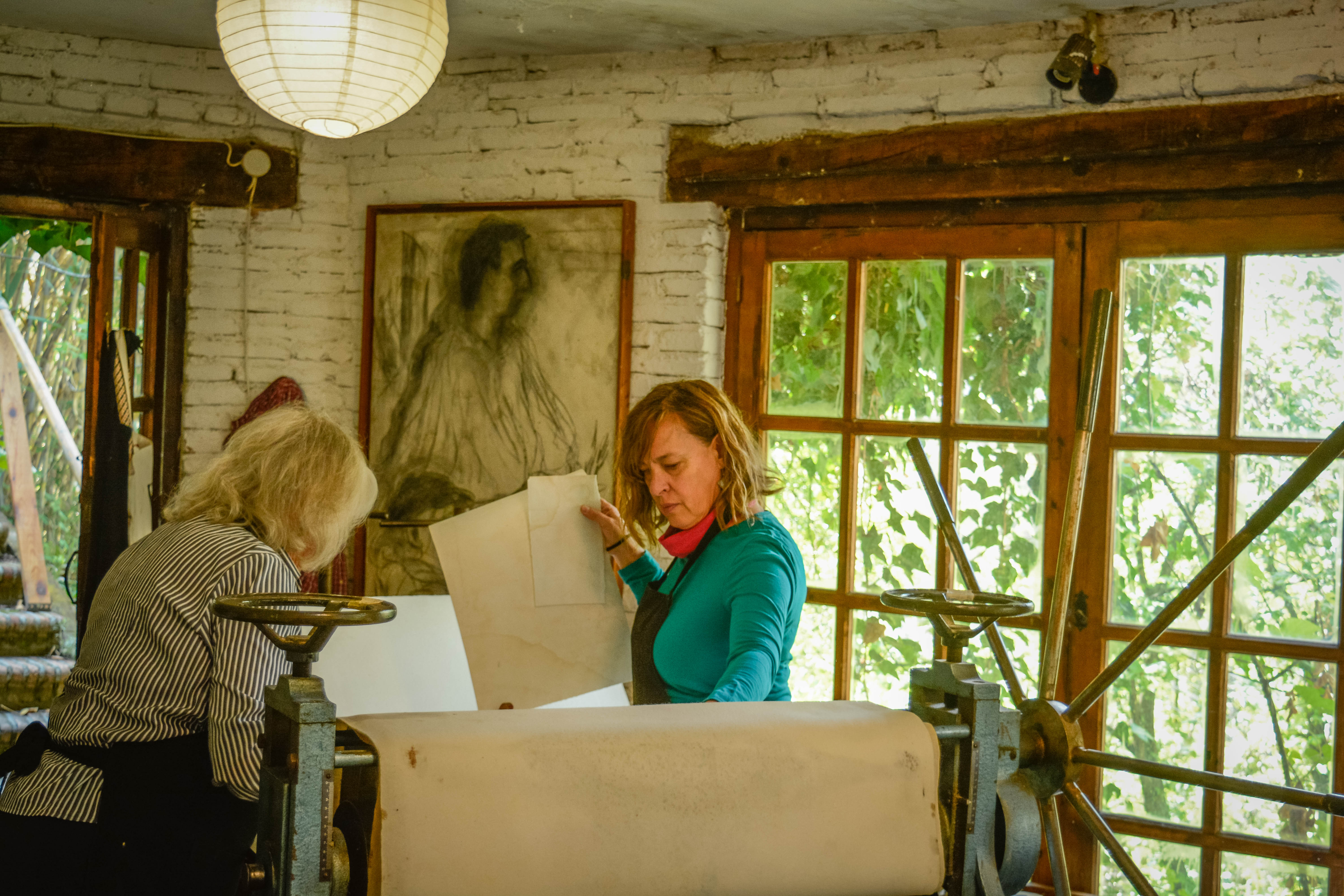
The following morning, Monday, we started work on Rebekah’s artist’s book. What a challenge. The book is little, but the essence is all there. Just over a week later, I asked my long-time helper, María José, to come in and help us print up a few examples of Rebekah’s book, on different papers and in different colors. It won’t be a numbered edition, as each book is different.  Each one is a monoprint with hand-written captions.  The little, accordion-style book is charming, and moving, and it taught Rebekah a lot about making prints and artist’s books. She’s taking the plates with her and can pull an edition of it whenever she likes.

And I had the privilege of accompanying an exceptional young artist on her first steps in printmaking. The talent scouts from Duke knew what they were doing in Louisiana.

Here’s Mike’s pictures:
Thanks for commenting and sharing.
Read Full Post »

DSC_0716

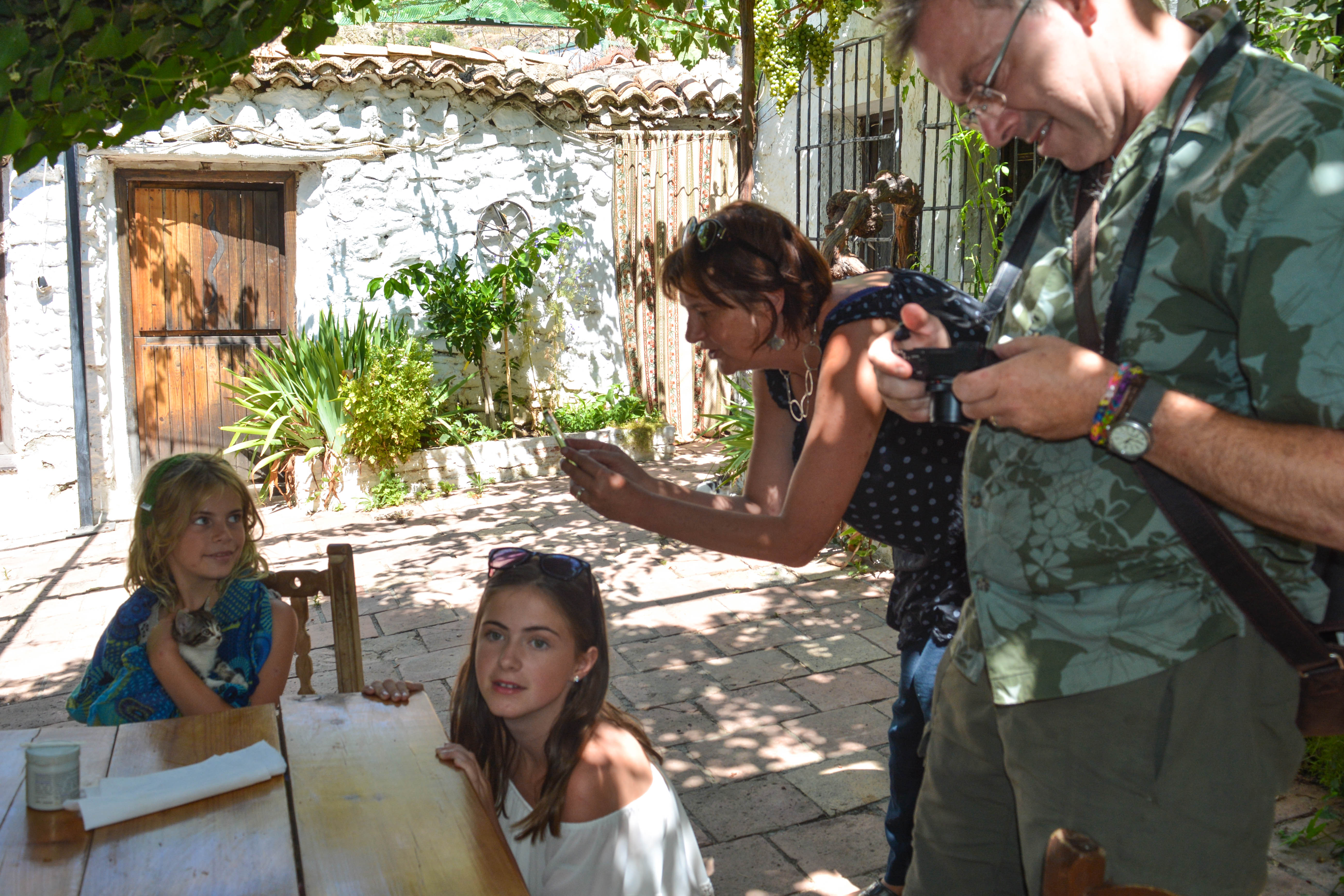
Nikki Braunton, on holiday in Órgiva at the foot of the Sierra Alpujarra (the seaward slope of our Sierra Nevada) with her husband, John Chase and their two girls, came for a visit the other morning. We had only known Nikki through Facebook, so it was lovely when they showed up en persona. I made a chocolate cherry cake–which was still warm from the oven, but they didn’t seem to mind–and we had coffee and tea on Mike’s new table out under the grapevines.

Nikki and John wanted to see my studio so we spent some time down there. John and Mike are both photographers, so they got on like a house afire. The two girls, ages 8 and 12. seemed interested in everything–studio, prints, cats, Cuca–and withstood the boring conversations of older people admirably.

Both John and Nikki work at the Museum of London, he as a photographer, she in the photo archives. “I only do three days a week,” Nikki says, “so it leaves me time for printmaking.” She works at the Greenwich Printmakers open studio. Nikki and John have fallen for Órgiva and have spend their last few summer holidays there.  So, we hope to see them back here next year. Happy printmaking, Nikki.


Read Full Post »

It was such a beautiful morning yesterday that Mike took his camera and macro lens out in the garden. The red flowers and baby fruit are from our pomegranate tree. Spanish for “pomegranate” is “granada,” by the way. A neighbor gave us a cutting of the blue morning glories on the right many years ago. They came with a warning: “Be careful, they can take over your garden.” They did. The wispy little white flowers are honeysuckle. They form banks in the garden and perfume the atmosphere out there all summer. The yellow star is a zucchini flower. We put zucchini in everything. The two yellow flowers are some sort of squash, which appeared on top of the compost heap. Our lemon tree is called a “limonero lunar” in Spanish. It flowers every month so during most of the year we have both flowers and fruit.  Here’s the pictures.

.

P.S. This one’s for cousin Carole.

Read Full Post »

DSC_9127

Here’s the second half of the photographs from the IB Bremen printmaking workshop 2016.

Read Full Post »

Brenda Eubank-Ahrens returns to my studio for the fifth (or is it the sixth?) consecutive year with a new group of students from her art class (two of whom were here last year) at the IB School of Bremen, Germany. We both look forward to these visits. It gives so much satisfaction to see young artists blossom in a new setting with new techniques. And the results can be surprising. (You will be able to see the display of their work on Tuesday’s post.)

Read Full Post »

DSC_8522

Mike ran across a video on the web the other day and he immediately called me to have a look at it. It was an ad for Graydin , a coaching service (with offices in New York and London) that advises high schools around the world on ways of empowering their students. According to their website their service is founded on the premise of “Ask, don’t tell.”

As I sat down at the computer he said, “See what this reminds you of.” This fascinating video lasts less than three minutes but in that time it became clear to me what he was driving at. My reply to him was: “This is what I do.”

The truth is I never thought of myself as a coach, nor my work as coaching. I’ve been a printmaker for more than 30 years and a dozen years ago I began offering summer printmaking courses in my studio. As time went by my workshops turned more and more into mentoring for individual artists. It just seemed to make sense. Being able to give my undivided attention to an artist (whether a student, a beginning artist, or a full professor of art) and to work collaboratively for two straight weeks was so much more productive than a group workshop. We advanced so much faster and farther. And my students really noted–and appreciated–the difference.

So, if you look at the top of this page you’ll find a new subtitle under Printmaking Courses in Spain. It says “One-on-One Coaching for Print Artists.”

Read Full Post »

May first every year is festive in Granada, but this year it was even moreso. Granadinos, including those of our pueblo, Pinos Genil, celebrated three fiestas on the same Sunday:

  • Mothers’ Day (Día de la Madre)
  • Labor Day (Día Internacional de los Trabajadores)
  • The Day of the Cross (a Spanish rites of spring celebration that they refer to as El Día de la Cruz)

Any one of these commemorations can justify dressing up, going down to the village square, eating and drinking a little too much, singing, dancing, oogling the beautiful young people and generally getting a bit unruly.

What follows is a selection of photographs that Mike shot that day for his Somos Pineros.com (We’re from Pinos!) photo blog.

.

Read Full Post »

DSC_7659

Lola Higgins arrived at Maureen’s studio a couple of weeks ago, a timid, uncertain recent graduate from the Edinburgh College of Art, the art department of the University of Edinburgh. She had made a few solar prints there but didn’t like neither the process nor the results very much.

Lola´s plan was to reproduce some of her photographs as high quality solarplate prints. When Maureen suggested going beyond mere reproduction, to start from scratch with freehand drawing in India ink on a laser acetate, Lola’s reaction was: “Draw? I can’t draw!”

With a little bit of encouragement Lola started drawing and never stopped. She went from strength to strength and, with Maureen’s help, turned her drawings into stunning solarplate prints. She finished up after 10 days with a portfolio with which the maestra affirms she should start visiting galleries in London, her home town. (See photos of the prints on the drying racks below.)

After Lola left, Maureen said to an artist friend, “I d0n’t think I’ve ever seen a young artist make so much progress in so little time.”

.


Read Full Post »

Neither snow nor rain nor heat nor gloom of night…

We’ve had a bit of all that in the past few days but it didn’t slow down the art studets and professors from  The American School in Switzerland (TASIS). Twelve students from Italy, Turkey, Mexico, the USA, Russia, Afghanistan, UK, and France have come to Maureen’s studio for an intensive five-day introduction to solarplate printmaking.
Art professor Martyn Dukes and photography professor Frank Long have returned this year with another crop of young artists and photographers. Some of the photographers were asking themselves what they were doing in a printmaking course, but when they saw the first prints made by tracing over photographs on acetates, burning them on photosensitive plates and putting the plates through an etching press on beautiful paper, they quickly changed their minds.
Here’s the first snapshots from day one. Tomorrow we’ll take a look at some of the work they’ve done.

Read Full Post »

Mau_in_studio_ffill 007

And What You Can Do About It in Your Own Work

How many artists have come into my studio on the first day proclaming, “No, I’m not interested in solarplate. I’ve done it and I didn’t like the results.” Then I get out some solarplate work that I and other people have done in my studio and the negativism turn to questions. “How did you get those whites? How did you achieve those velvety blacks and the whole range of tones? These are beautiful prints!”

This happens regularly. Why? Because solarplate prints are (apparently) so quick and easy to make. You just scan or photograph an existing image (sketch, watercolor, photograph…), print it on a transparent acetate with a laser printer, sandwich it under glass with a photosensitive polymer plate, and expose it under sunshine or a UV lamp. Wash and dry it, pull a print of it on an etching press and, bingo, you’ve got a solarplate print. Well, almost. What you’ve actually got is a mediocre solarplate print. Given these results most artists never get beyond this point. It’s a shame as solarplates, when prepared with care and criteria, are capable of yielding beautiful work. With them you can either opt for positive intaglio prints using an aquatint screen, or negative relief prints without the screen.

What’s the big secret. There’s no big secret, but there a lot of little ones, and some of the most important have to do with the preparation of the acetate. It’s your all-important original. If you don’t start with a beautiful acetate you’ll never get a beautiful print. Most of the flaws in a typical solarplate print are introduced in the process of scanning. Even if you start out with an image with a proper range of tones–and no watercolor will ever clear this hurdle–the scanning processs will degrade that image. How do you recover it?
The best way is to skip the scanning/photography process altogether and create your image directly on the acetate using an opaque medium such as India ink or etching ink. You can also use lithographic ink and pencils or permanent black felt pens. This will guarantee you black blacks and brilliant whites. You’re already ahead in the game. Then you can add mid-tones to a positive plate by diluting the ink in various degrees. If you’re using Indian ink dilute with water, if it’s etching ink, with turps.

The aquatint screen, exposed first, before the image acetate, enables you to render tones in your solarplate print, similar to aquatint in an acid etching. Negative plates, similar to a woodcut or linocut, require pure blacks to highlight relief. You can use the same exposure time for the aquatint screen no matter what the light source. The area where  you put the black ink will be washed out down to the steel backing leaving the unpainted areas in relief.

If you need to work from a scanned image you will have to adjust contrast in PhotoShop or other image treatment program (or take it on a pen drive to a good photocopy shop and have them do it for you) and then later by hand, working on the acetate.  This means cleaning the whites with a cotton bud with a little alcohol and strengthening the black areas with opaque ink, felt pens or lithographic pencils. (NB: Be sure to use special laser acetates. If you use a normal acetate it will melt inside your printer.)

If you don’t have a vacuum exposure unit–and not many of us do–you may have trouble achieving perfect contact betweeen the plate and the acetate during exposure. This is especially important as the plates get bigger and more expensive, as you don’t want to waste many of them! To avoid this problem I add a layer of 15mm-thick foam rubber in what becomes a six-layer sandwich (from the bottom up: backing board, two felt blankets stuck to the board, a sheet of foam rubber, the plate, the acetate and the heavy-duty glass beveled on the edges). All of this I clamp firmly with six spring-loaded C-clamps.

Achieving proper exposure of a solarplate requires both art and science. People who come to printmaking from photography or science backgrounds usually emphasize the former, painters the latter. Both approaches require extensive testing. The photographers tend to do it more systematically, the painters more intuitively. Whatever your inclination, don’t be tempted to rush the exposure testing process. The success of all your solarplates from here on out will depend upon it. And don’t forget to incude the plate wash times in your tests. They are also a factor in getting quality results.(Note: The best light source for exposing solarplates is the midday sun, so you should probably move to Spain or Arizona.)

Pulling your first print from a properly prepared solarplate is a satisfying experience. If you’ve done everything right the improvement is notable. Your first proof print will not be your bon a tiré, however, and it’s still not too late to retouch your plate with a bit of drypoint. Now you enter into the thousand nuances of choosing and mixing inks and printing your plates, not to mention paper selection. I usually refer to this state as “creative printing.”

But that’s another chapter.

P.S. All of the steps in this process are easier to do than to explain. Come on over and we’ll do them together!

I almost forgot. I have made a video tutorial on this subject, available here.

.

Read Full Post »

Older Posts »