Feeds:
Posts
Comments

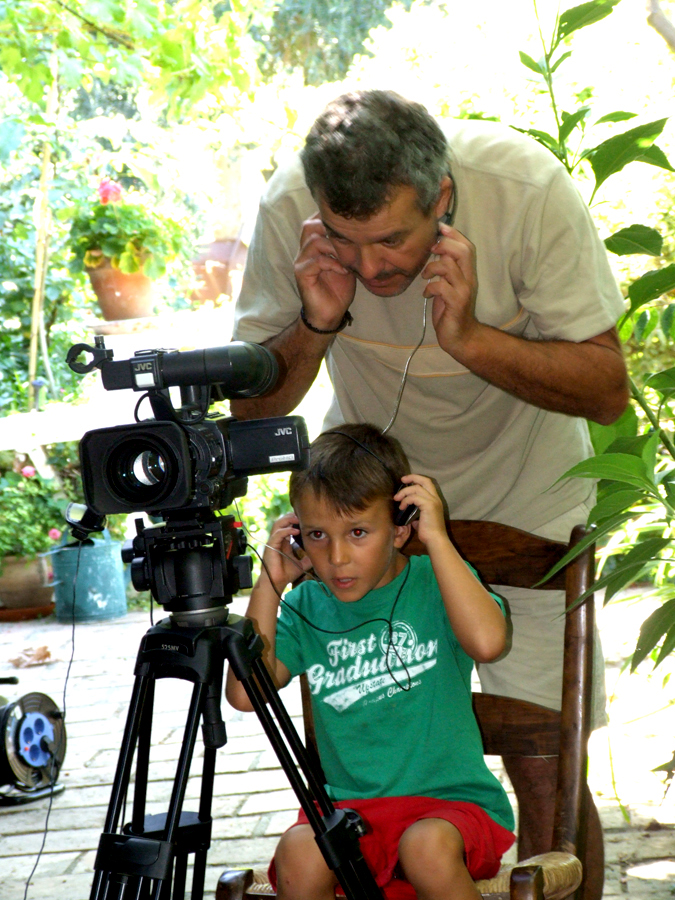
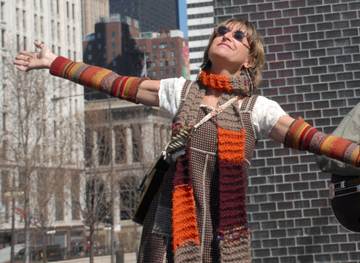
Juan Carlos with his assistant director, MarioOur video/cineasta friend, Juan Carlos Romera, has taken advantage of the new YouTube service to upload the complete version of “Bive,” a 38-minute short film that he made in 2005. In that film I play “Maureen,” an English printmaker who falls in love with a Spanish fisherman. The film is essentially about the storm it causes in a little fishing village on the coast of Almería province.

We had such a great time doing it that I decided that in my next encarnation I want to be an actress. Here’s the link to see it (for free) on the off chance that you might find it amusing:

Mike did a story on the making of “Bive” (Printmaking Makes the Movies) and published it here on World Printmakers.

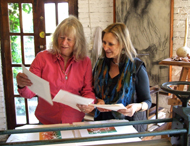
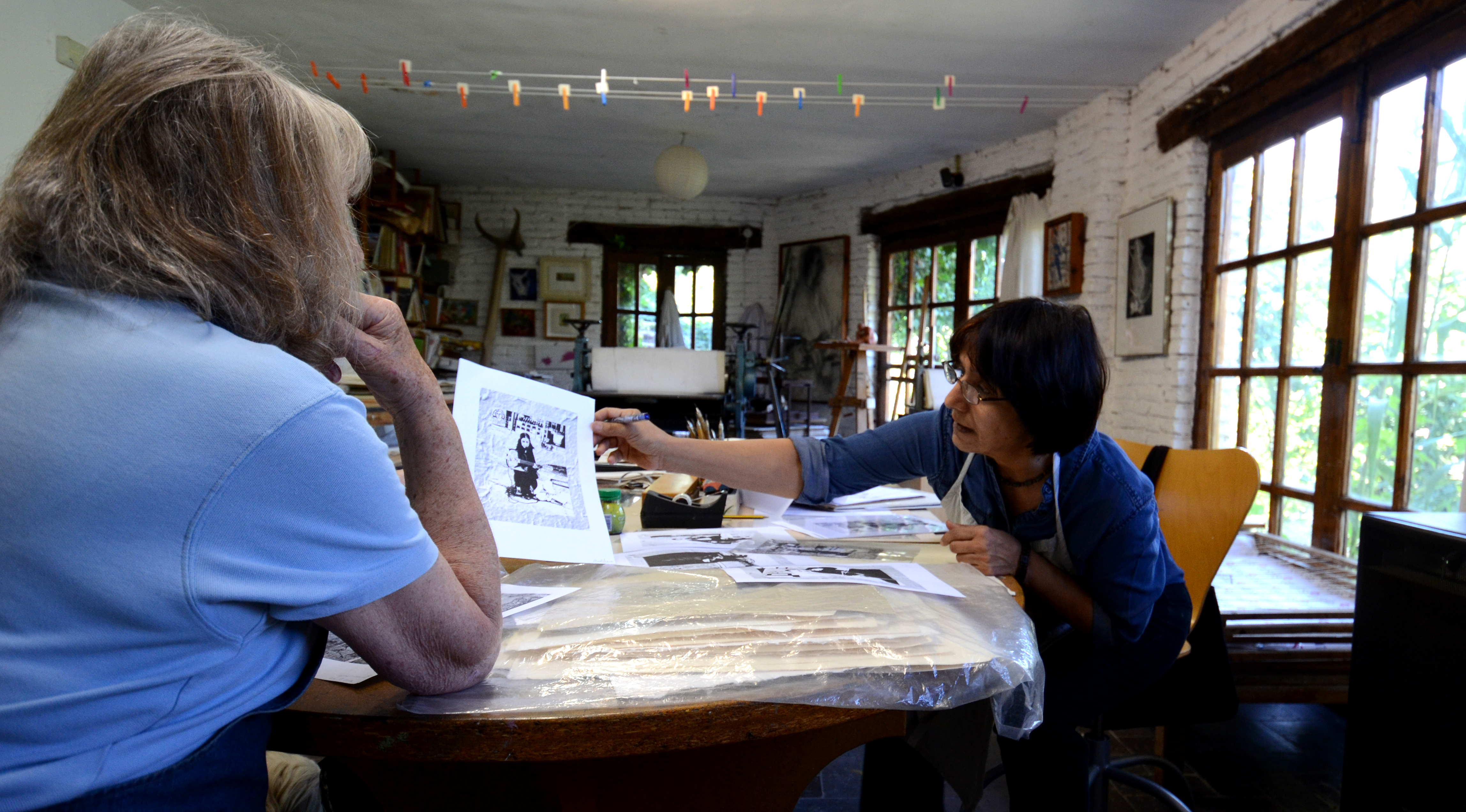
Lorna and Maureen in the studioLorna Ryan-Burden writes from Melbourne to say that her liquid-metal print,  “Pyrotechnics I,” has just won the “other media” prize in a local show, a prize that came accompanied by a $500 check.

My sincere congratulations to you, Lorna. It’s so rewarding for me to see the amazing progress you have made since you were first here a couple of years ago. Keep up the good work! I’m sure you will. You’ve got what it takes: talent and enthusiasm.

Lorna Ryan-Burden's prize winning liquid-metal print

Accompanied by the voice of José Carreras

Do you think this video is calculated to seduce you to come to Granada? You’re right.

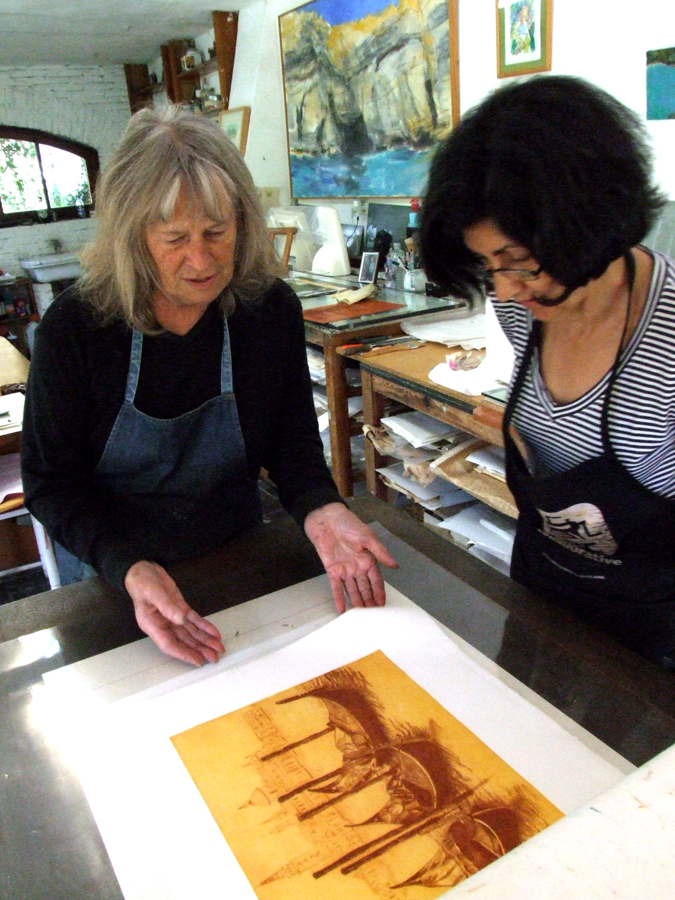
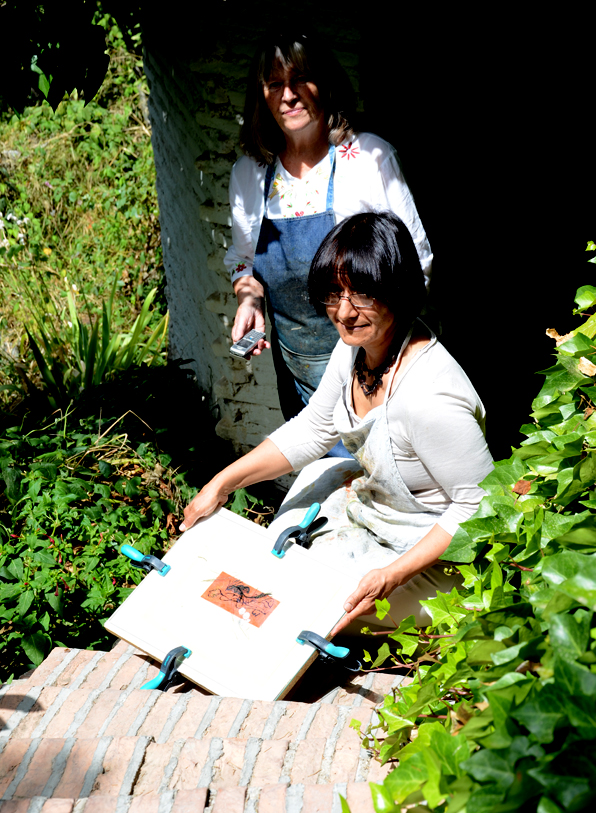
Mauren and Jini Grinwald pulling a printThanks to an exclusive new service from the world’s leading video site artists can now access my printmaking tutorials–formerly available only via download–on YouTube. So they (you) will no longer have to go through the download process. All you need to do is click on a link and start watching them immediately in streaming video, with excellent image quality even in full-screen mode.

Sound interesting? Follow this link.

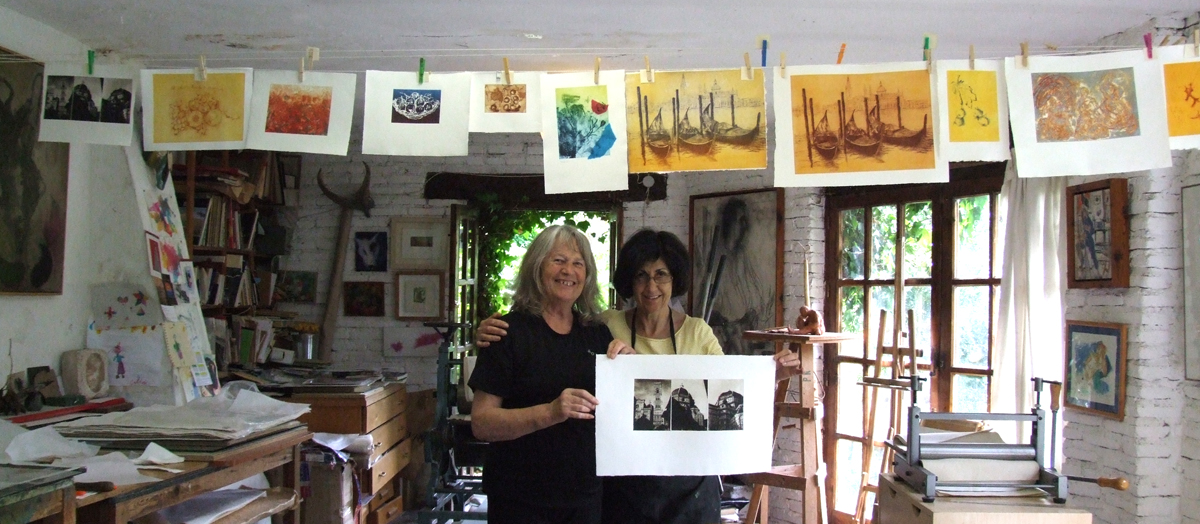
Maureen and Jini, with some of the work she produced in September

Jini Grinwald made her reservation a year in advance. She wanted to spend the month of September in the Gallinero and working with Maureen in the studio. She had studied printmaking at Melbourne University, “but that was a long time ago,” and she thought she needed to learn some new approaches. “Traditional printmaking didn’t offer me enough sponteneity,” says Jini. “I needed some techniques capable of offering me more freedom, more fun, not the same old kitchen chores.”  Jini caught the plane back to Australia this morning, but before she left she had time to answer some questions in the airport coffee shop: Continue Reading »

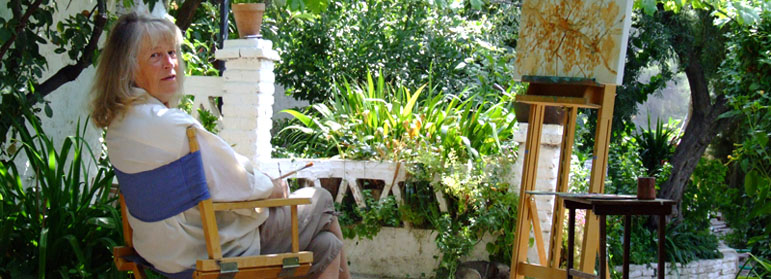
Maureen paints in what little spare time she can find.

Maureen Booth, Master Printmaker

Fine-Art Printmaking as Cottage Industry

Maureen converted a stone cottage in Spain into an international fine-art-printmaking business. It took her 34 years and an Internet connection.

Granada, Spain, September, 2012—When artist Maureen Booth moved with her husband and two children to an Andalusian village 40 years ago, fleeing from a suburban British all-mod-cons existence, they were seeking a simple, authentic lifestyle. They didn’t have a car, a television, a washing machine or a phone.

Today Maureen reigns over a multi-faceted fine-art-print operation which spans the world. “The changes weren’t really that complicated,” says Maureen, “keeping in mind that they took place over a long period of time. They were driven by a combination of curiosity and the creative restlessness the Spanish call “inquietud.” Beyond that it was just a logical evolution from painting to printmaking and, of course, an Internet connection.

Maureen’s “evolution” has taken her from a little painting studio in a converted goatshed to the international etching studio of the Rodriguez-Acosta Foundation in Granada where, at the end of the 70s, she was selected on the basis of her drawings to spend three years studying printmaking. When the foundation closed Maureen bought one of their etching presses and set up her own printmaking studio at the bottom of her garden.

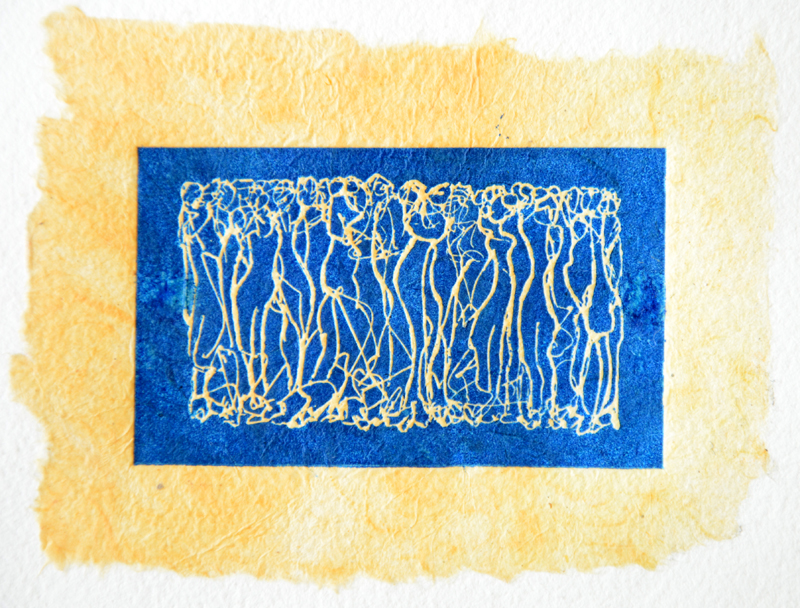
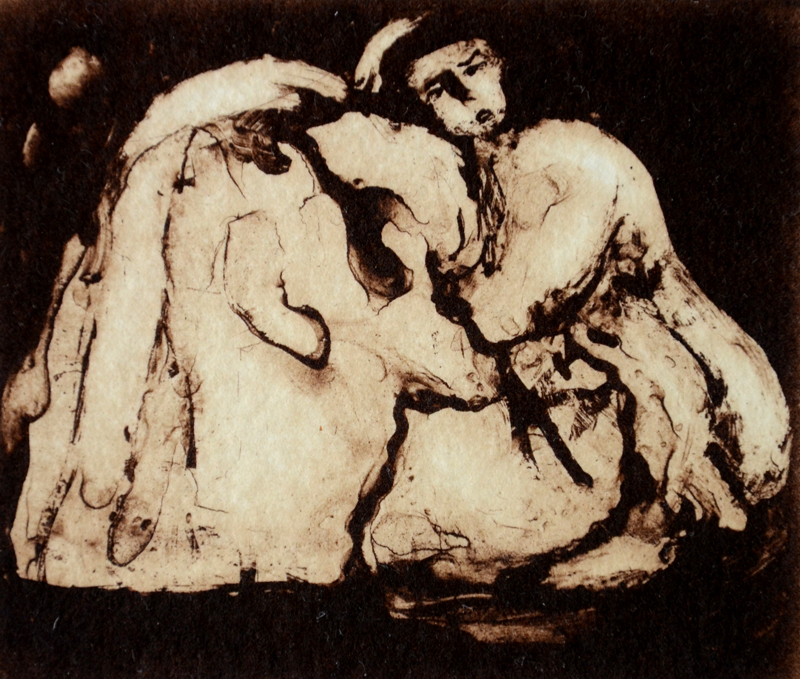
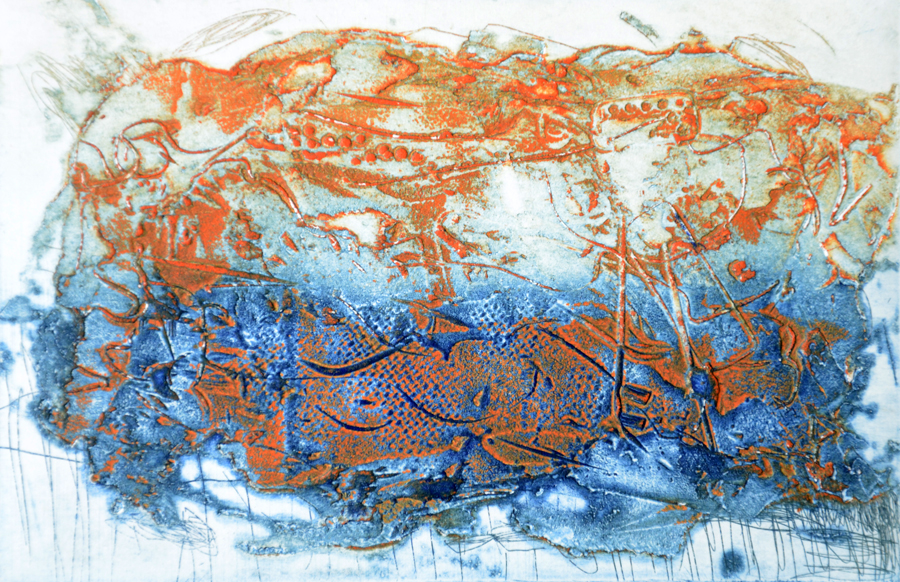
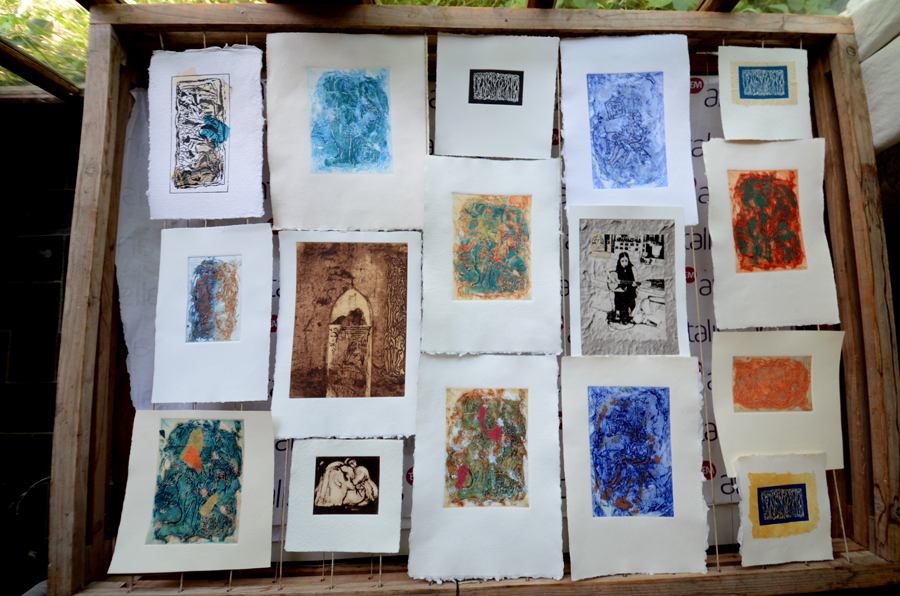
There followed years of making prints, editing her own and other artists’ work and running printmaking workshops in her studio and other places around Europe. Today she creates highly-personal hand-pulled fine-art prints in limited editions on a variety of exquisite handmade papers. (All of Maureen’s work is original; she does no digital copies.) She has also had time to raise three children and exhibit her work worldwide. Three years ago she converted a onetime chicken house into a rustic apartment for artists who come to do workshops in her studio. Word spread and her Gallinero (Chicken Coop) residence was soon well booked by artists from more than a dozen countries who come to participate in Maureen’s workstyle and lifestyle. Her latest initiative, started last summer, is Printmaking Master Classes, a collection of printmaking tutorial videos for download.

“Ironically,” says Maureen, “it was Internet that made my recent projects possible. I say ‘ironically’ because in 1999 when my husband Mike offered to make me a website I replied, ‘What for? I’m an artist.’ How little I knew then! Today I’ve got a website and two blogs of my own, plus participating in a half dozen other sites. It was through Internet that I got my first international print commission, a print of the Torre del Oro in Seville for a California medical association that was holding a convention there. The commission was concluded in a single afternoon exchanging three or four emails. I’m still amazed.

It was also through Internet that artists began to come from abroad for my workshops and collaborative work in printmaking. It is so rewarding for me to work with print artists from far-off places. They’ve made me realize that printmakers form a fellowship that knows nothing of national boundaries. It’s as if they were all from the same place with the same concerns and aspirations.

We Have a Winner

Deborah Maris Lader in a mellow mood

Deborah Maris Lader of the Chicago Printmakers’ Collaborative

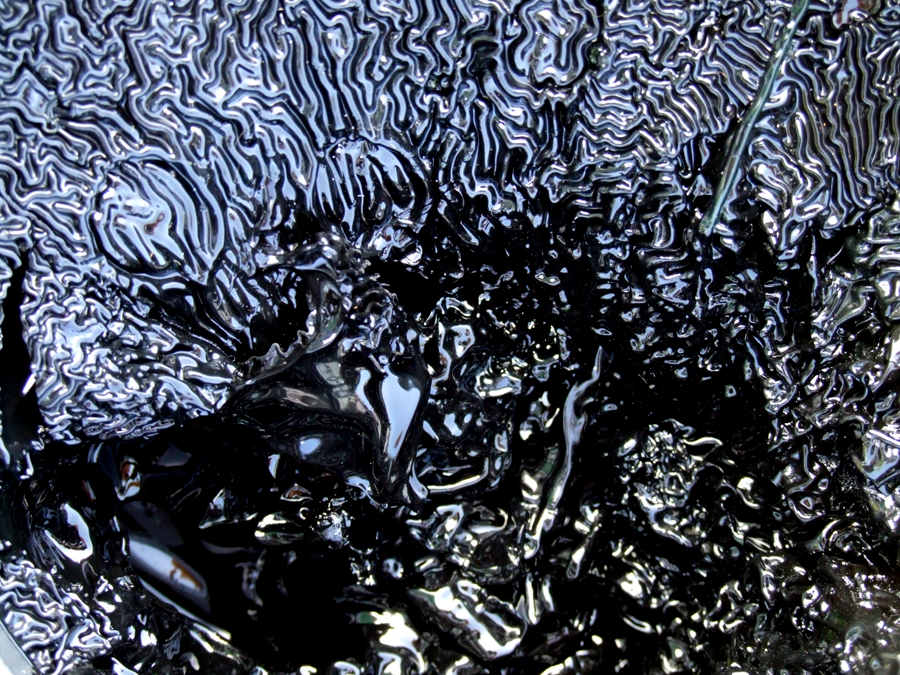
Last week’s mystery image was one that should have been easily identifiable by most any printmaker. In the end it was Deborah Maris Lader of the Chicago Printmakers Collaborative who correctly identified it as ink drying. The photograph below, which shows the ink tin, makes it easier to read. Congratulations Deb. Come and get your chilled summer wine. And if you arrive before September first we’ll include a chicken dinner.

Ink drying in a tin

Zahra Buali in the studio with Maureen Booth

Zahra Buali is a painter and printmaker from Saudi Arabia. She came to my studio earlier this month for a printmaking workshop. I’m not sure what I was expecting but Zahra exceeded all possible expectations, both as a person and as an artist. Everything Zahra says or does is permeated by sincerity, earnestness and a vast capacity for delight. That, along with her academic preparation–a Canadian art degree–and years of work in her own studio in Saudi, made her an ideal collaborator in the studio, as you can see by the samples of her production in the photo album below.

Thanks for coming, Zahra, for being so appreciative of everything, for learning so enthusiastically and for making us that wonderful meal of Saudi Arabian kabsa. Don’t forget us and come back to see us whenever you can.

What we were listening to: http://youtu.be/2oX2FSv4Rys

Have a guess: What’s this?

What's this a picture of?

Think you can identify it?

The prize: A chilled summer wine on Maureen’s terrace.

The answer: Next week.

What we’re listening to: http://youtu.be/IxuThNgl3YA

SaloArt, Salobreña, Granada, Spain

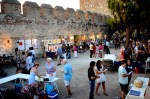
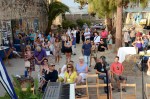
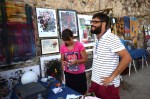
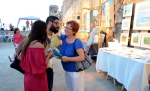
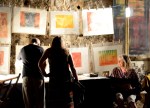
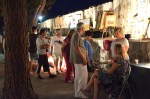
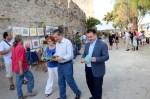
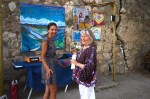
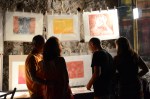
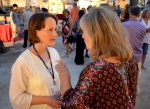
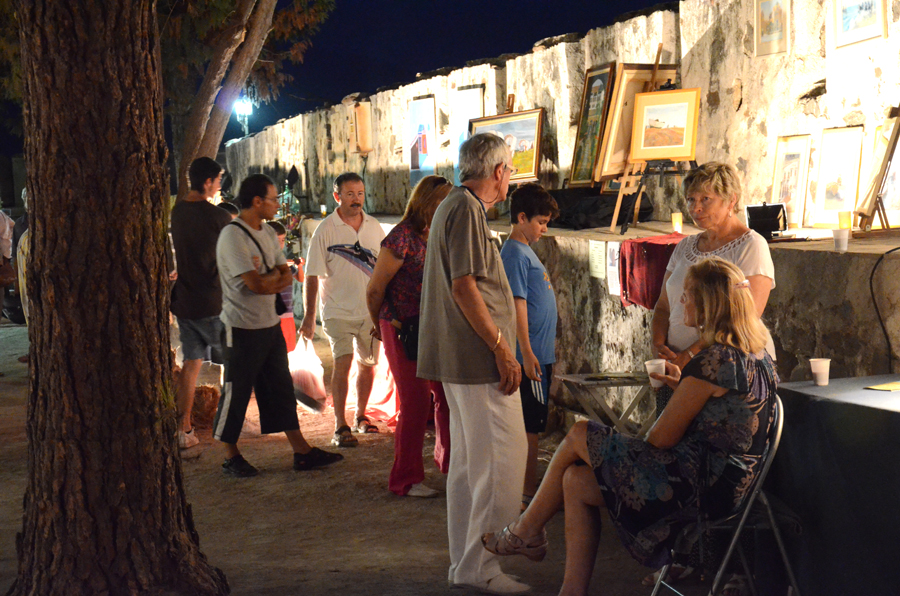
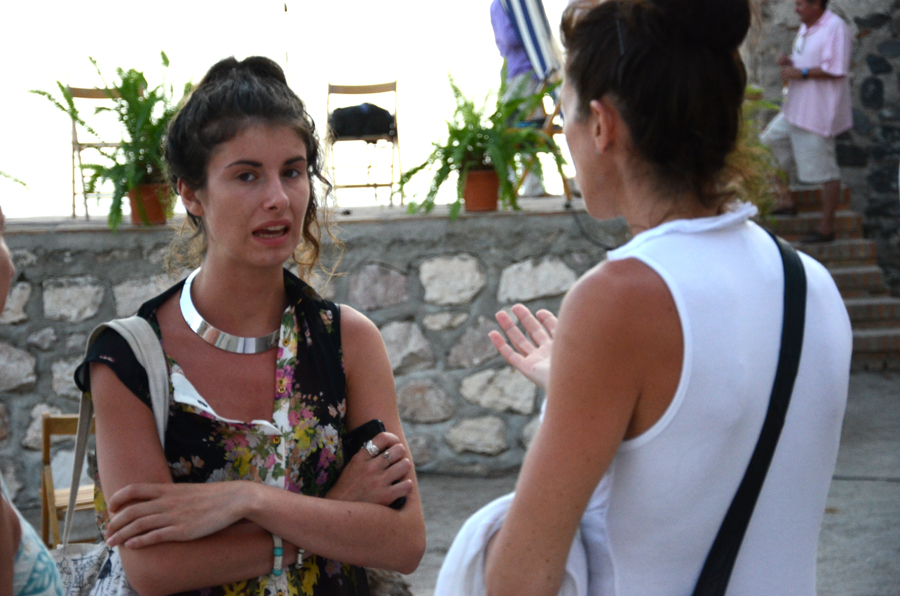
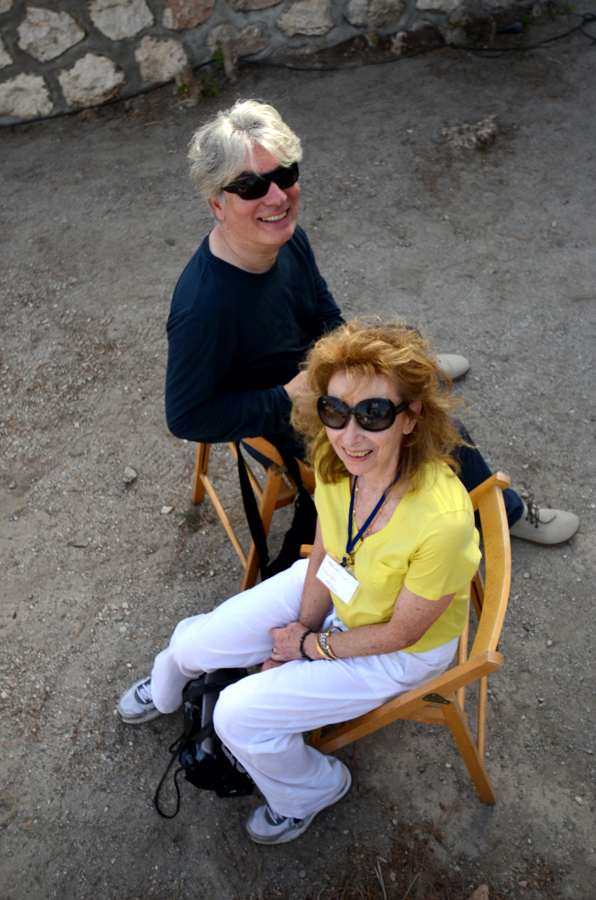
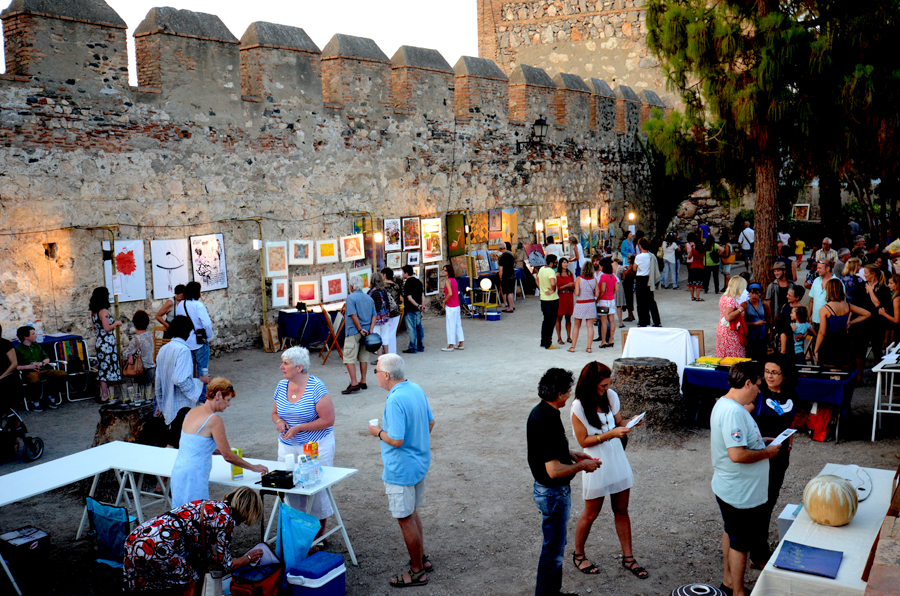
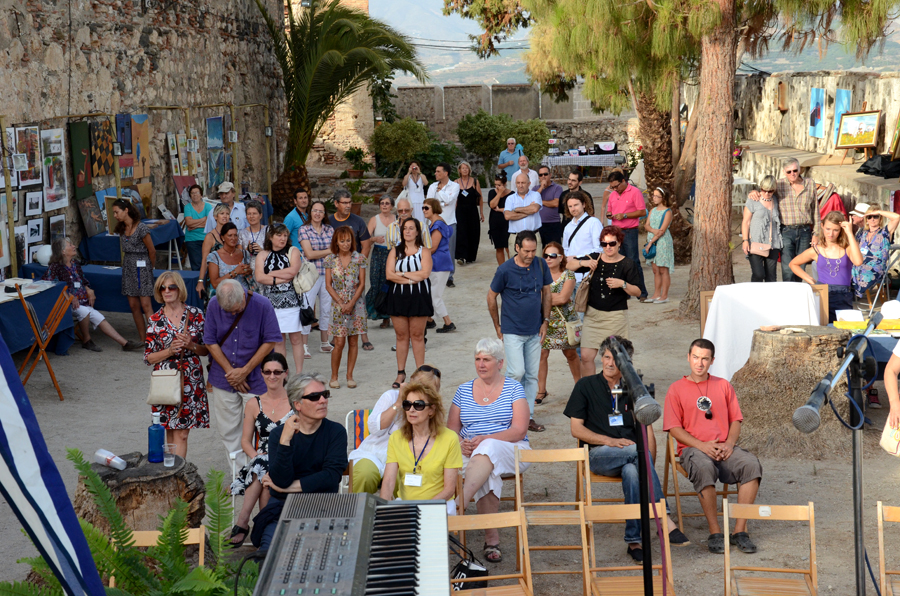
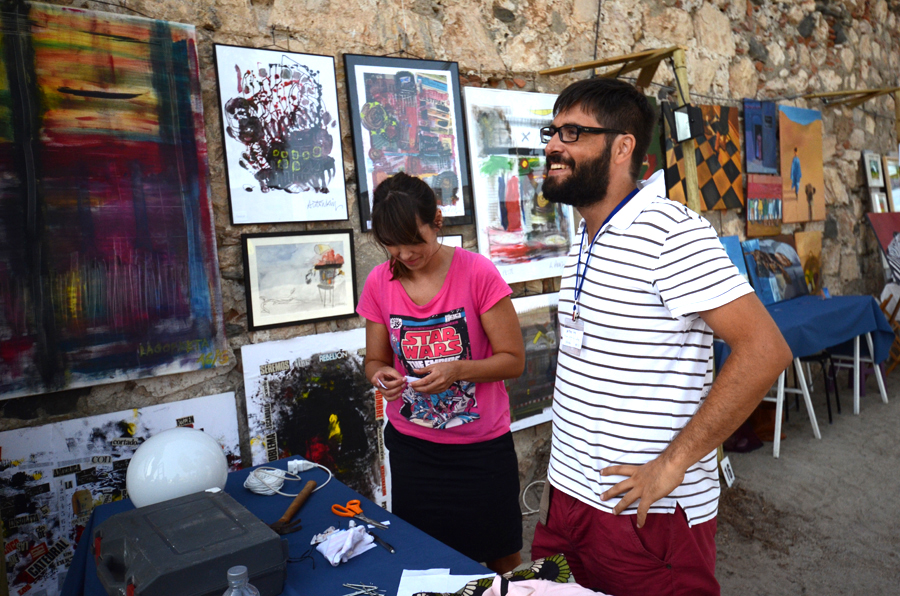
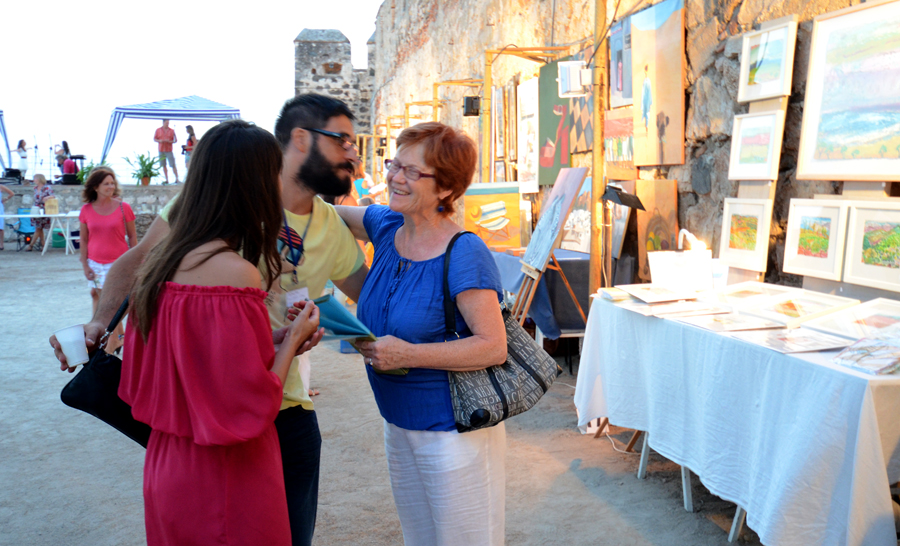
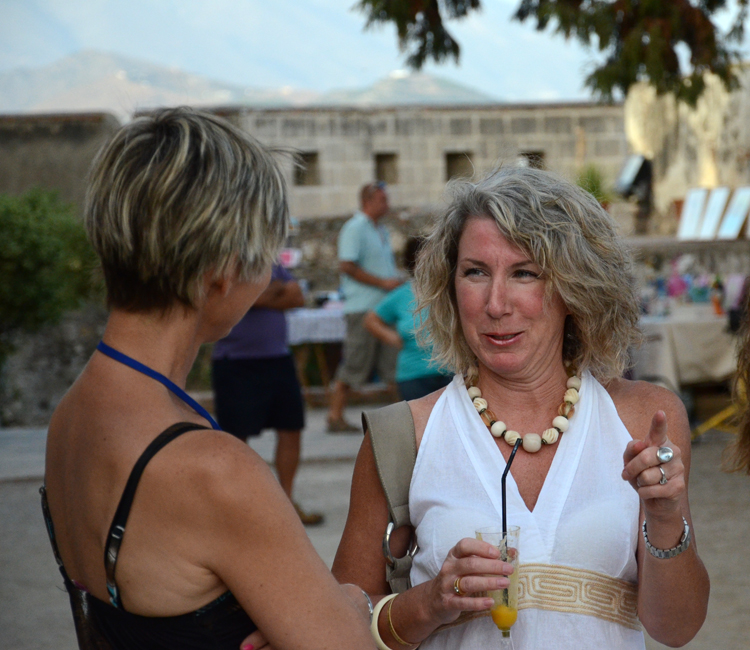
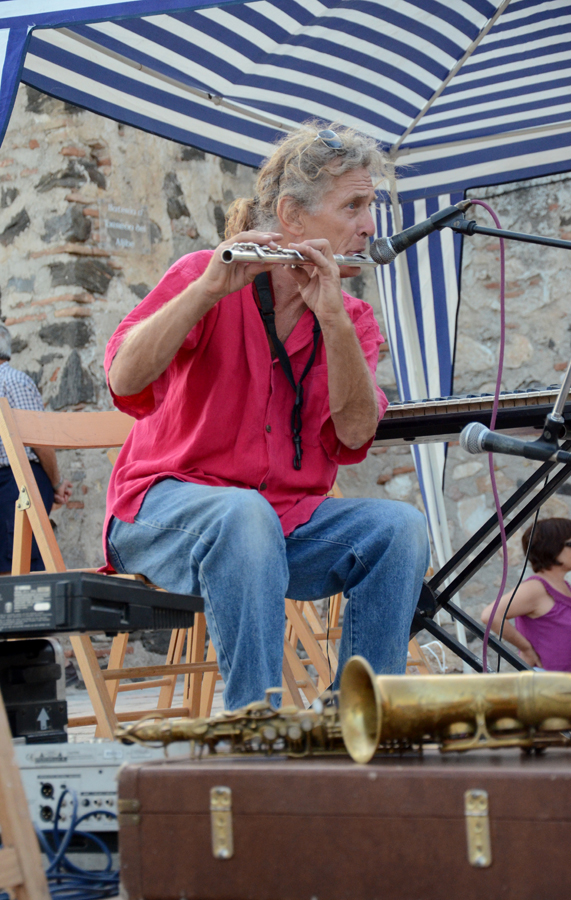
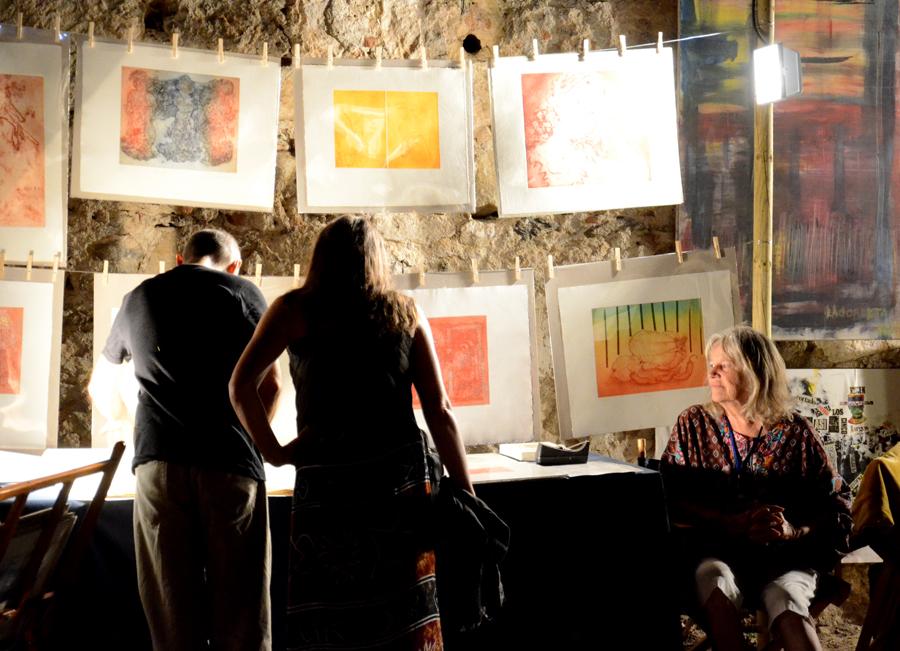
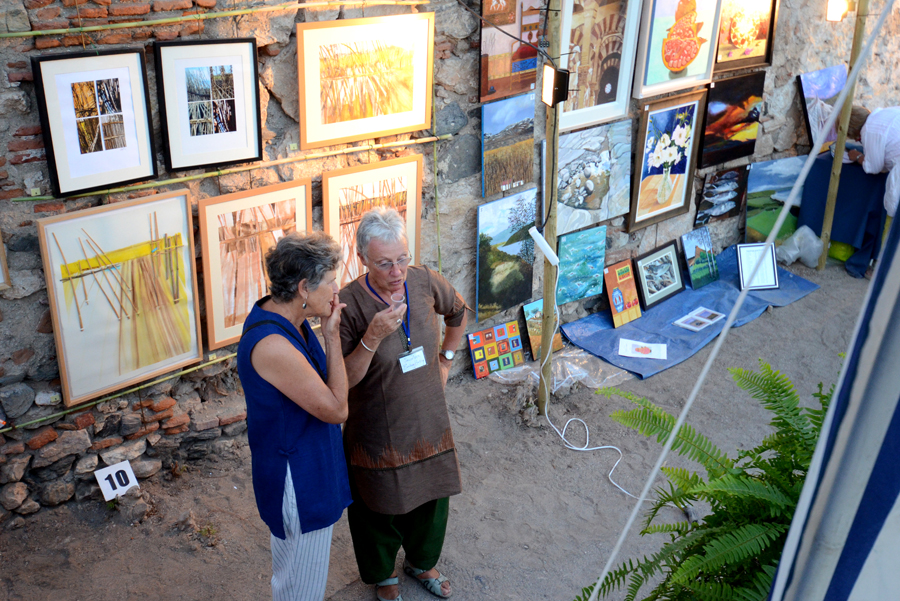
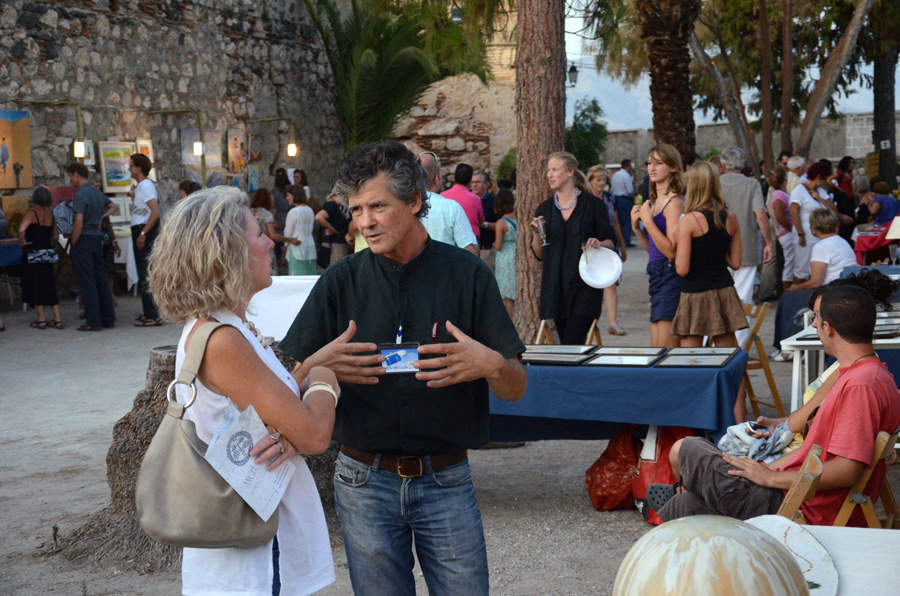
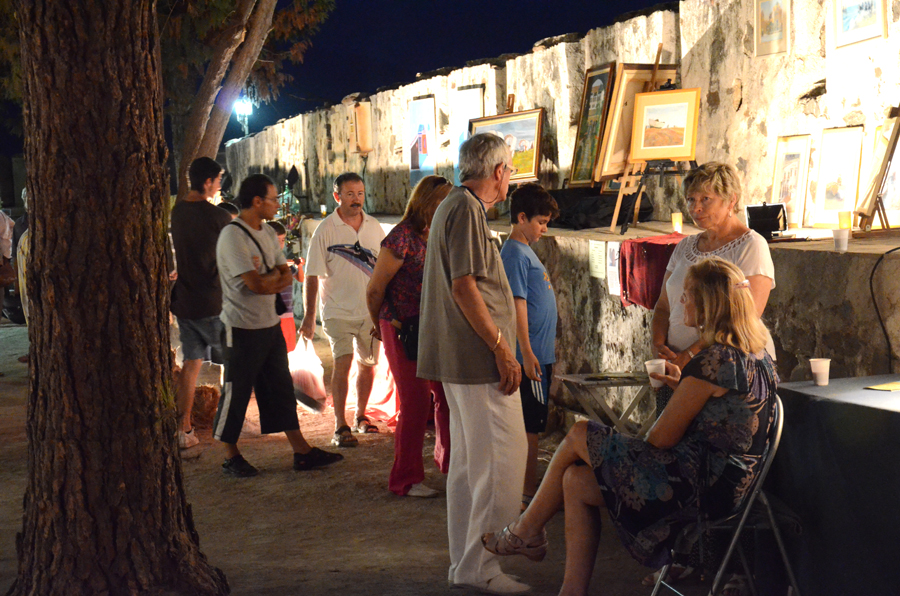
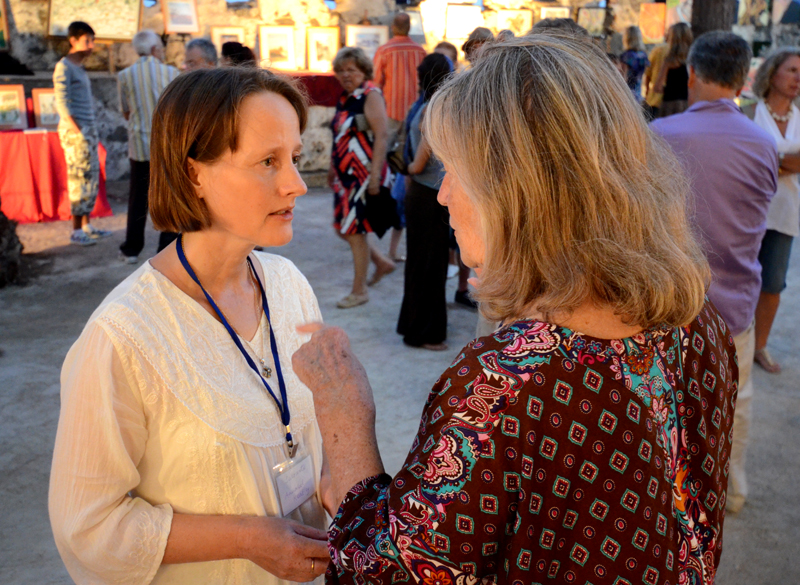
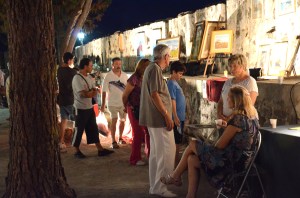
Artists and art lovers at the first edition of “SaloArt,” the art exhibition in the Moorish Castel which crowns the town of Salobreña on the Mediterrean coast of Granada. (See more photos in the album at the bottom of this post.)

The first edition of the SaloArte exhibition opened on the evening of July 26 in the Moorish castle at the top of this picturesque Andalusian village situated at the edge of the Mediterranean. Like all first editions of events which dream of future glory, it was fraught with anticipation, hope and ilusión (the Spanish word for a combination of both). There were a few teething problems–like a light failure–but that’s what first editions–dress rehearsals after all–are for. Nothing went wrong that can’t be easily solved for next year and everyone agrees that the event, with it’s Mediterranean ambience and dramatic towntop castle setting, can look forward to a brilliant future.

An enormous amount of credit must go to Helen Mc Cormack, president of the International Club of Salobreña, organizers along with the Salobreña town hall, of the SaloArt initiative. Besides being one of the gentlest people in the Western Hemisphere, Helen is a multi-talented multiprocessor, capable not only of organizing and supervising crews of carpenters and electricians, and charming all the artists, but also of delivering a cordial and professional welcoming speech in Spanish and English. Everybody agrees that the show could not have gone on without Helen.

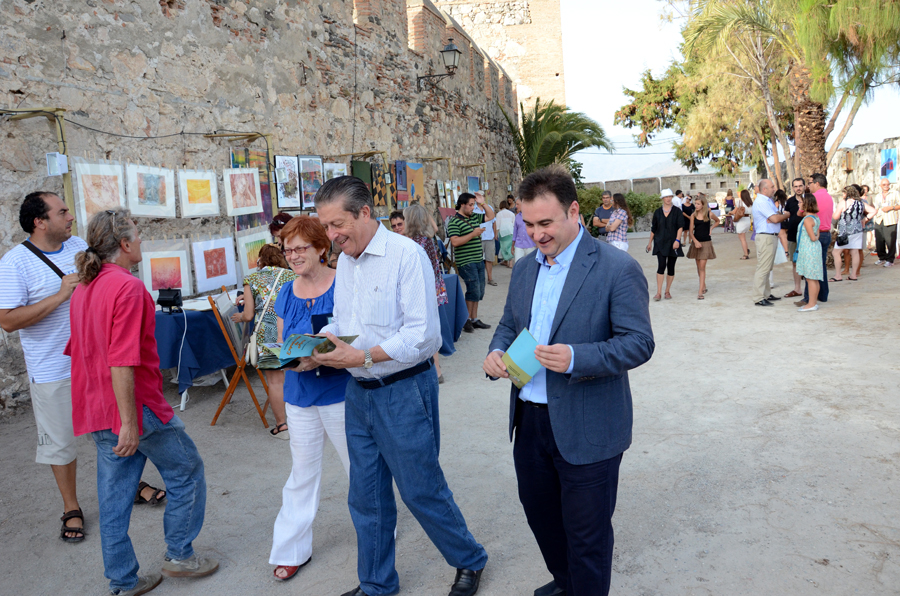
A highlight of the inauguration was the presence and brief remarks of Federico Mayor Zaragoza, remarks full of humanity

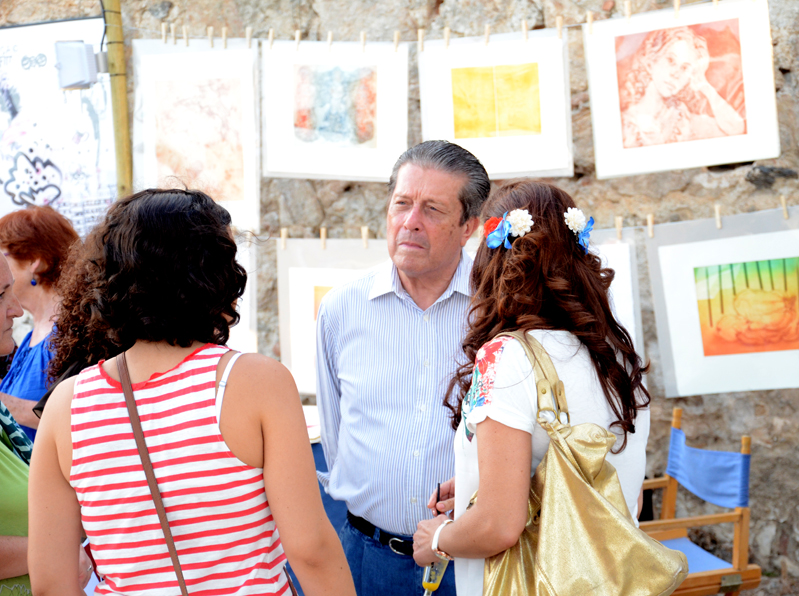
D. Federico Mayor Zaragoza (right) inaugurated the first edtion of SaloArte. Here he is with the mayor of Salobreña and Helen Mc Cormack, curator of the exhibit.

and common sense. Mayor Zaragoza has been one of Spain’s authentic eminences of the past 50 years. Don Federico was born in Barcelona and studied in Madrid, but since 1963 has been identified with Granada at whose university he was professor of biochemistry in the School of Pharmacy and later rector. He was for 12 years the head of UNESCO (1987–1999) where he gave new life to the organization’s mission to “build a bastion of peace in the minds of all people”, putting the institution at the service of peace, tolerance, human rights and peaceful coexistence, working within the scope of its powers and remaining faithful to its original goals. Under Mayor’s guidance, UNESCO created the Culture of Peace Programme, whose objectives revolve around four main themes: education for peace; human rights and democracy; the fight against isolation and poverty; the defense of cultural diversity and intercultural dialogue; and conflict prevention and the consolidation of peace. Always the humanist, he is currently president of the Foundation for a Culture of Peace, which he founded in the year 2000.