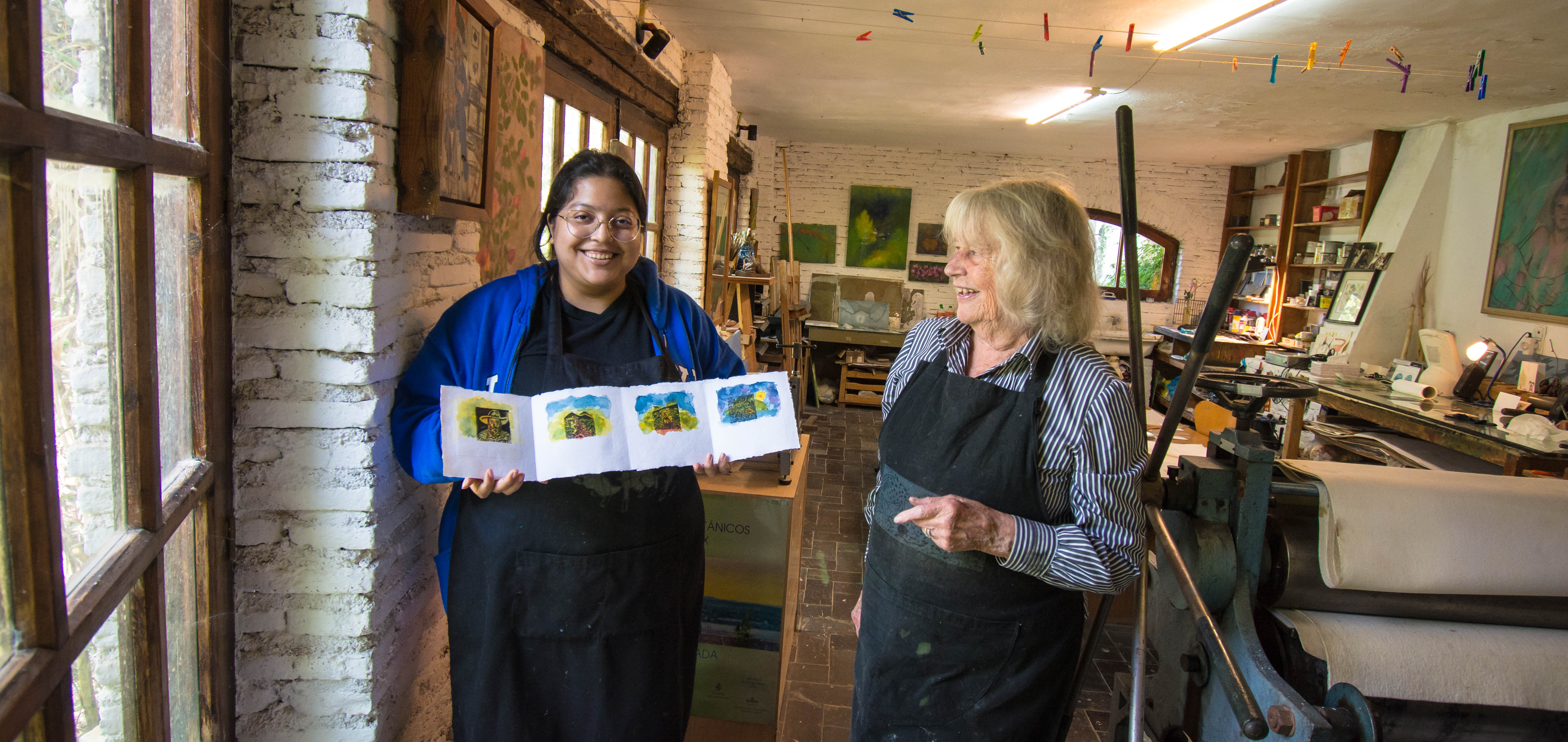
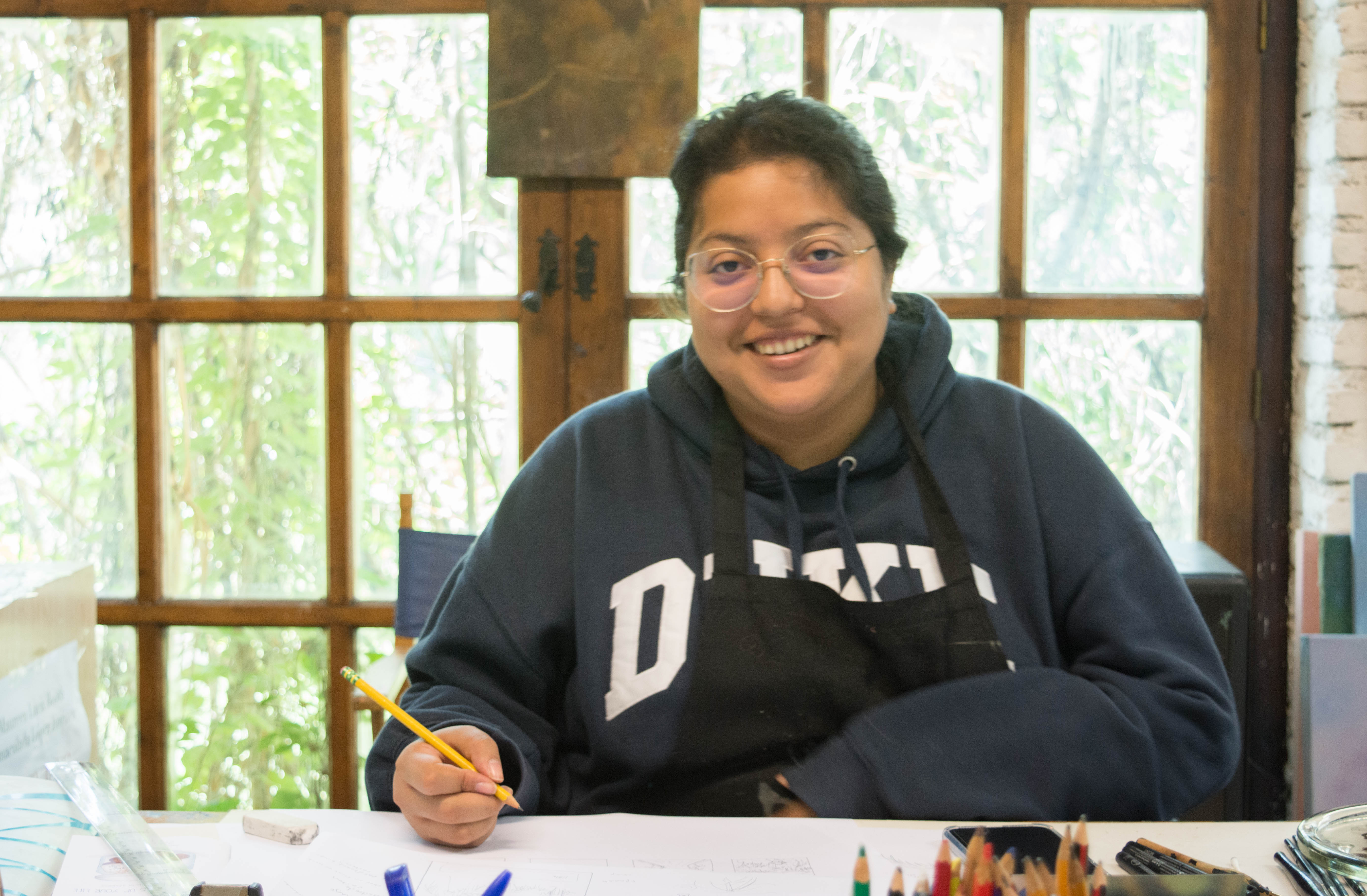
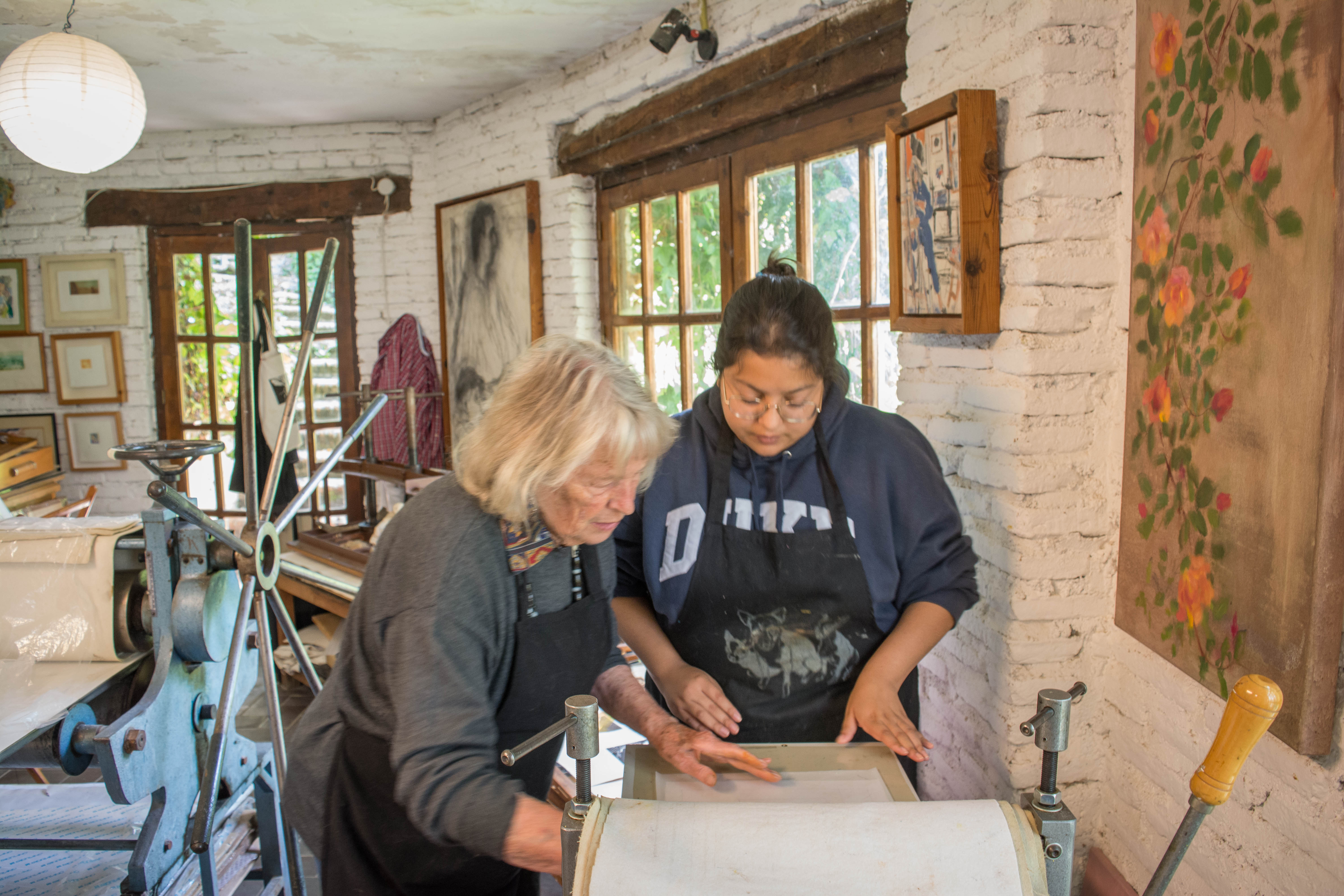
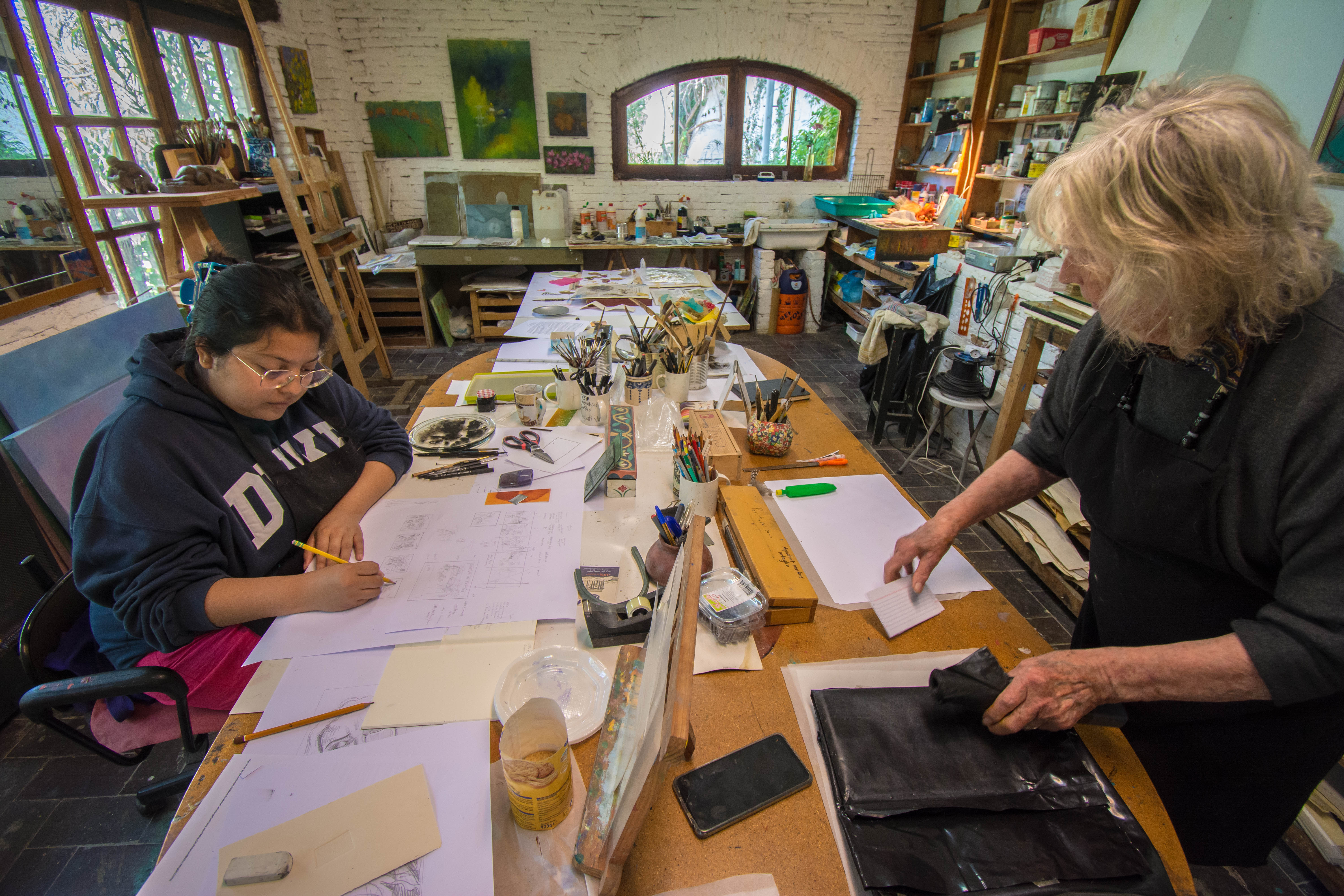
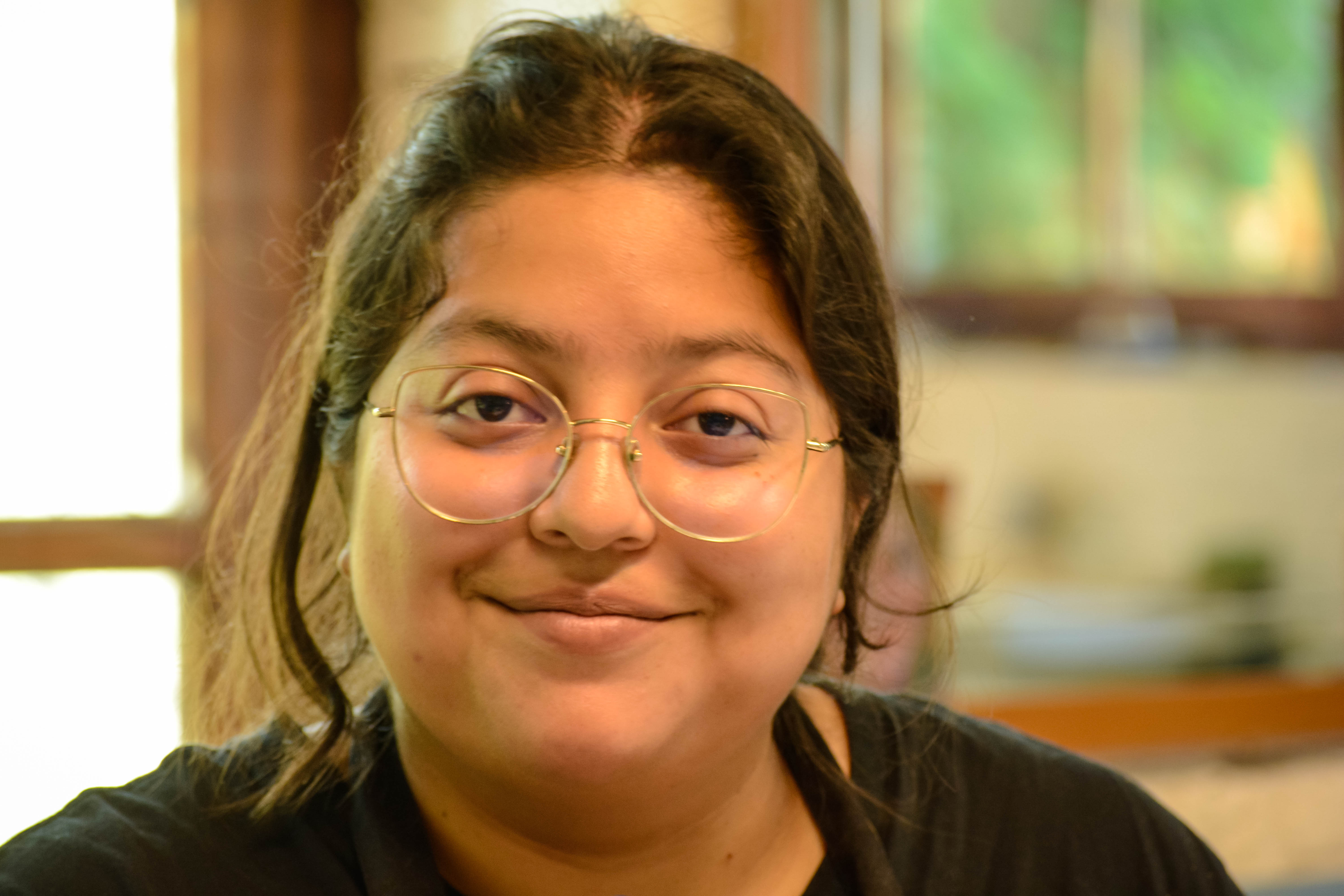
It’s almost as if it weren’t work at all. In theory, I’m not working any more. But printmakers and other artists keep popping up. And they are unlike “normal” people. They’re special, more interesting. They have more and different aspirations. The Spanish word is better: “inquietudes.” The young woman who has been here for the past two weeks is a perfect example. She has just graduated from a high-class American university with a dual major in Visual Arts and Cultural Anthropology. But she had virtually no experience in printmaking. We had to start from zero.
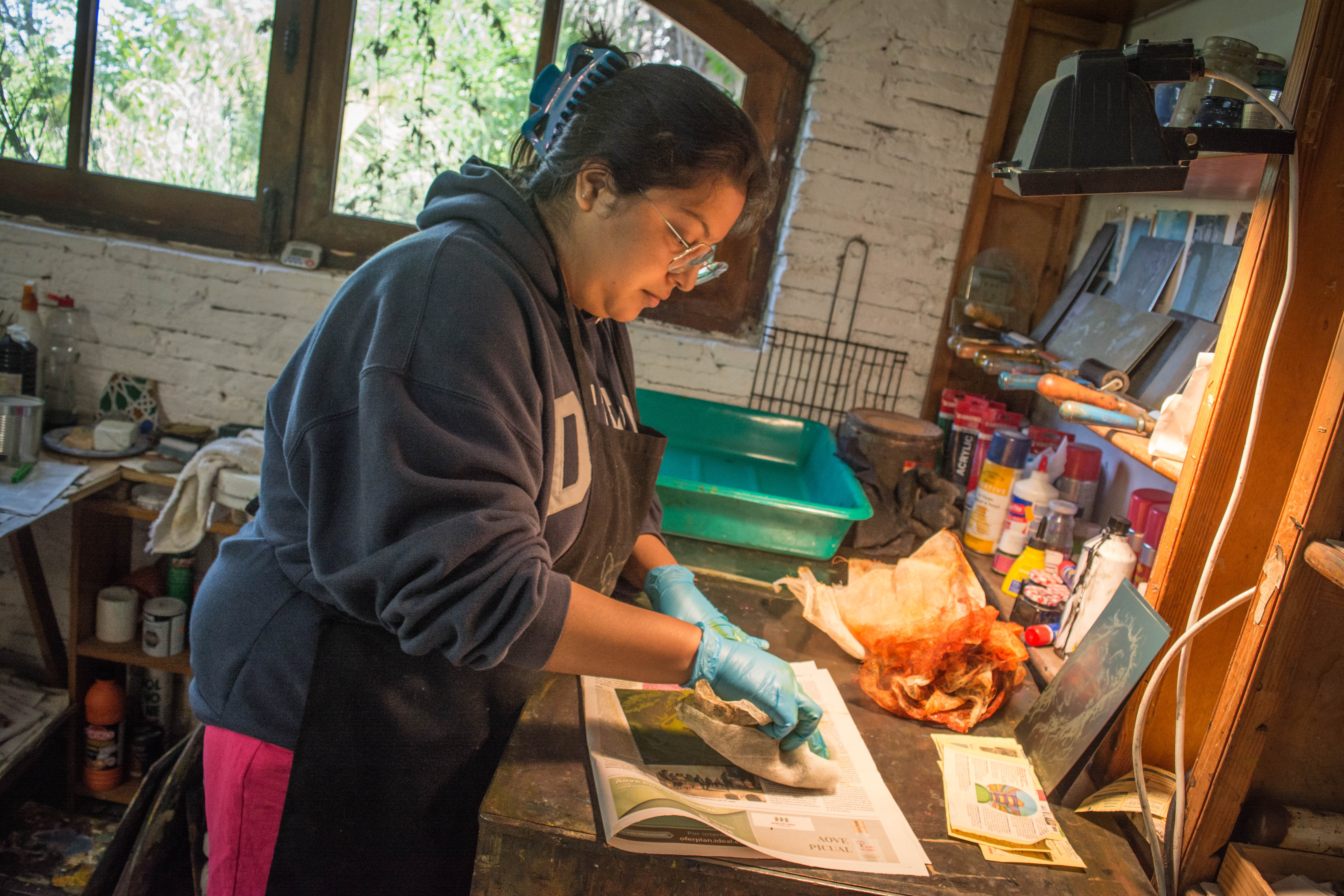
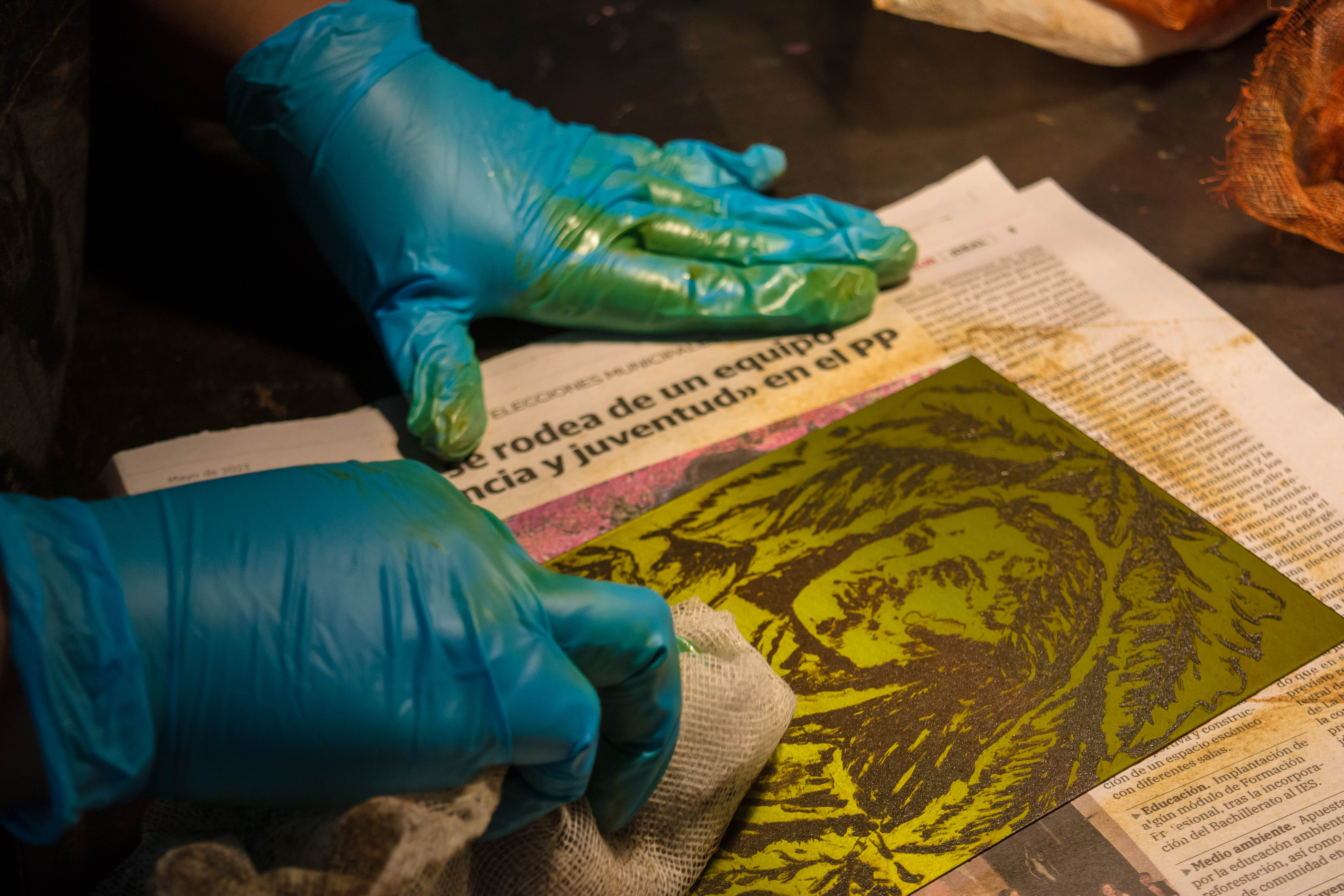
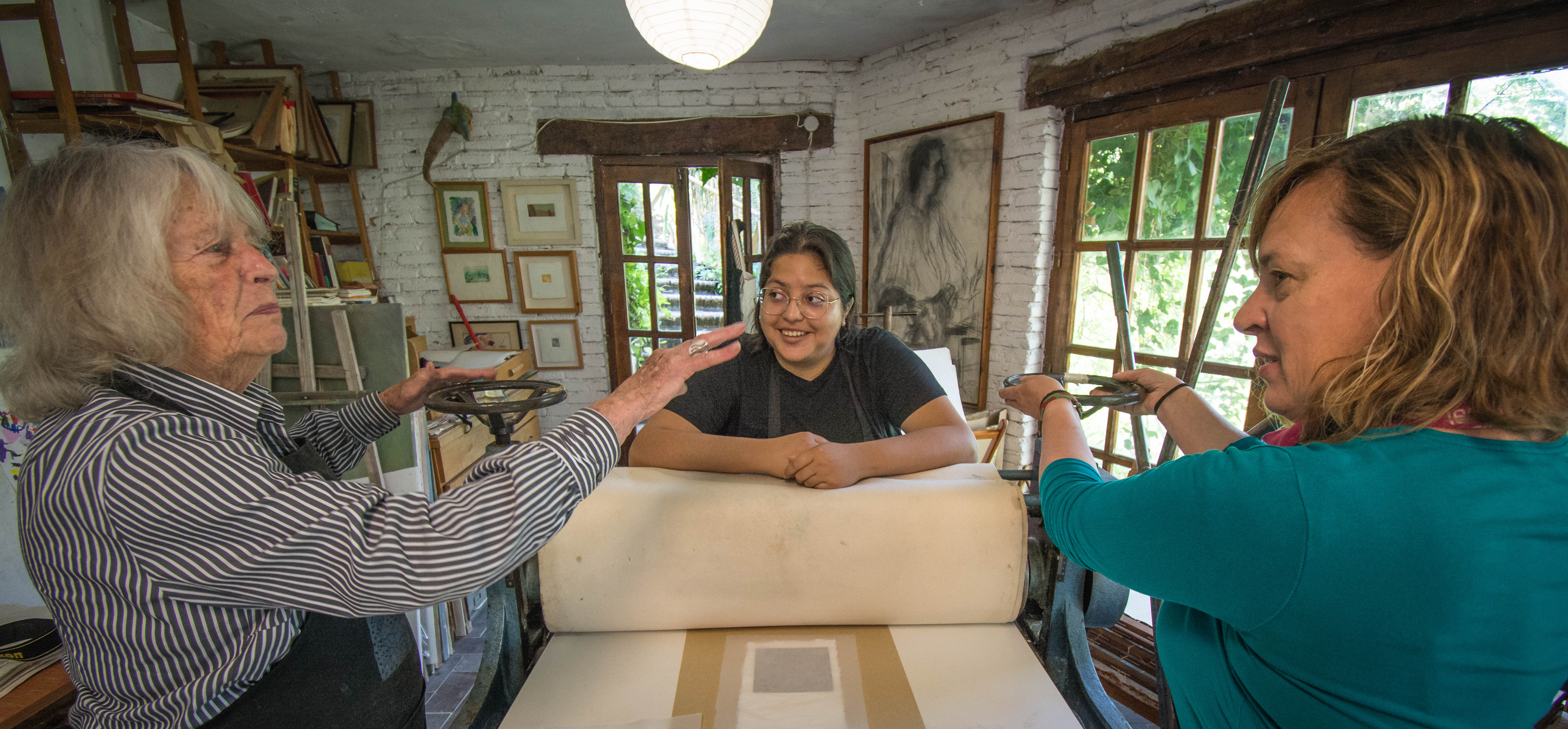
That’s not complicated. You just start at the beginning—preparing a plate—and continue through the basics. With luck, in a couple of weeks, the budding printmaker has a rough idea of making a print in various techniques and printing it in various ways. I saw a flutter of pigeons bouncing on a branch of one of our cypress trees the other day, and I stopped to try to decipher what was happening. Finally, I got the picture. It was complicated by the fact that baby pigeons, when the reach the age of leaving the nest, are roughly the same size as their mother. What I was looking at was a mother pigeon trying to get two of her offspring to leave that branch and go face the world.
That’s where my young printmaker was last week. But she was atypical from the beginning. Her plane landed in Málaga on a Sunday morning and she showed up at our house at midday after a long series of flights starting from New Orleans. It turns out that she’s from Louisiana but she was offered a scholarship to Duke University in Durham, North Carolina. Mike, who is cheeky, said, “That’s an excellent school. What made them go all the way to Louisiana to find you? Are you brilliant, or do you just work really hard?”
“Both,” she replied matter of factly. We weren’t in a hurry that Sunday afternoon, so Rebekah had time to tell us a bit of her story. She was born in Louisiana after her family emigrated there from their pueblo in Northern Honduras. There her grandfather—and by extension her whole family—grew everything and was self sufficient, until a giant American fruit company absorbed their fincas. Instead of living off the land, the children of the family grew up to become exploited workers on pineapple plantations. “What a life your grandfather led,” I noted casually. “Is he still alive?”
“No,” said Rebekah, “He died of a heart attack, a sequel brought on by a hit-and-run incident some years earlier with a Standard Fruit Company bulldozer. It was razing fruit trees in order to open up a road across what had been his former property.”
“What a story,” I said.
“Yes,” replied Rebekah,” I hope to write it someday.”
“It would make a wonderful artist’s book,” I said, entirely spontaneously.
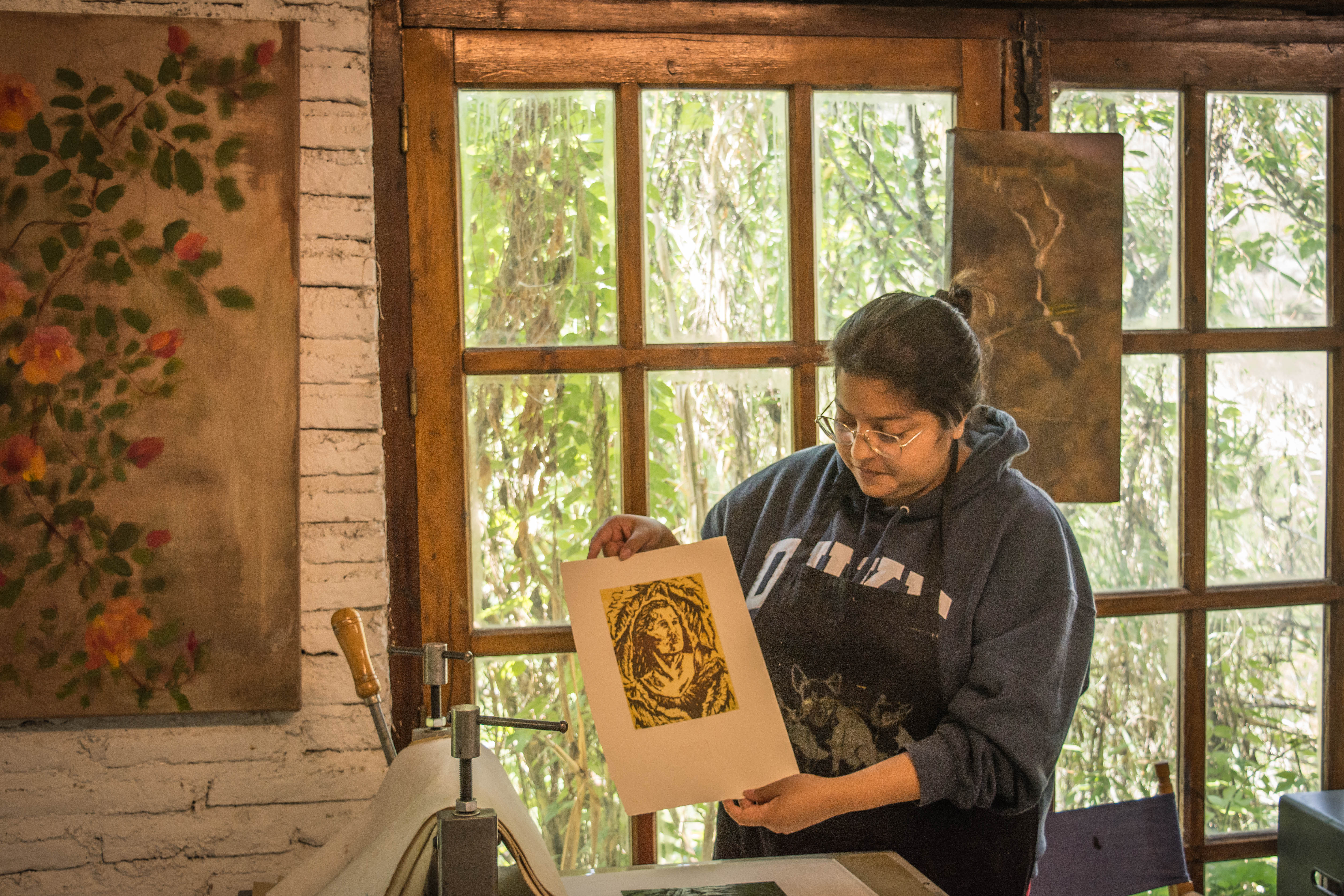
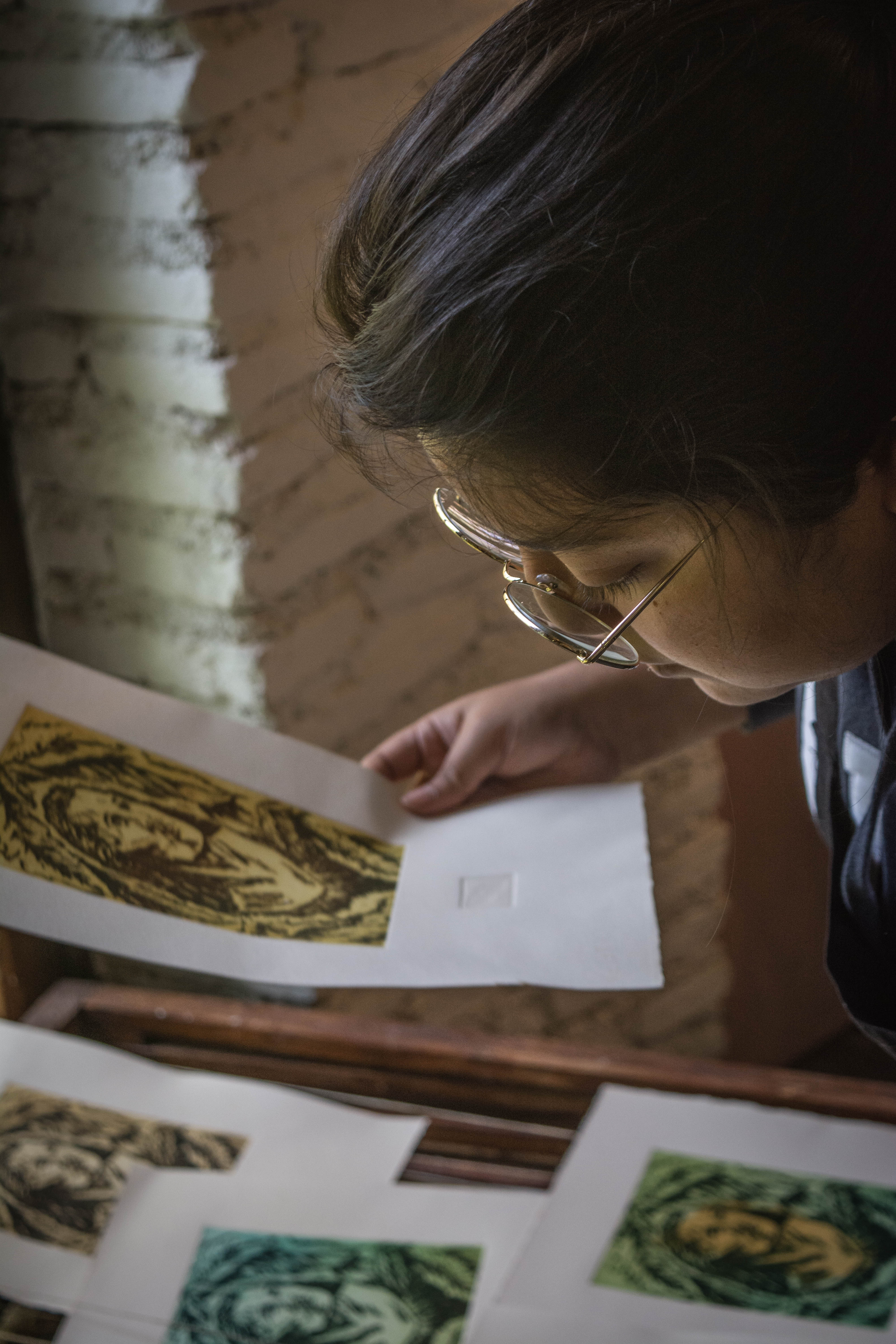
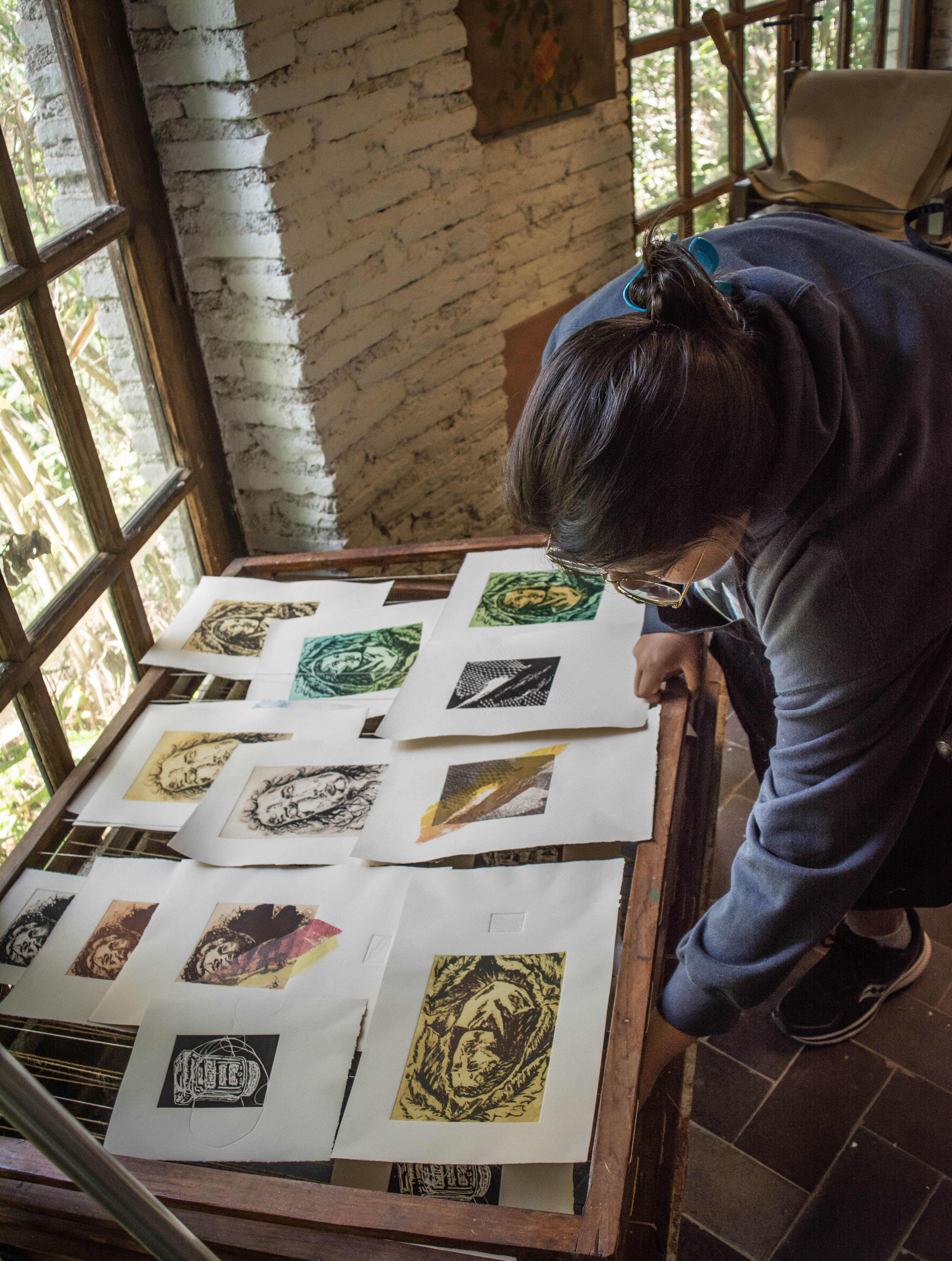
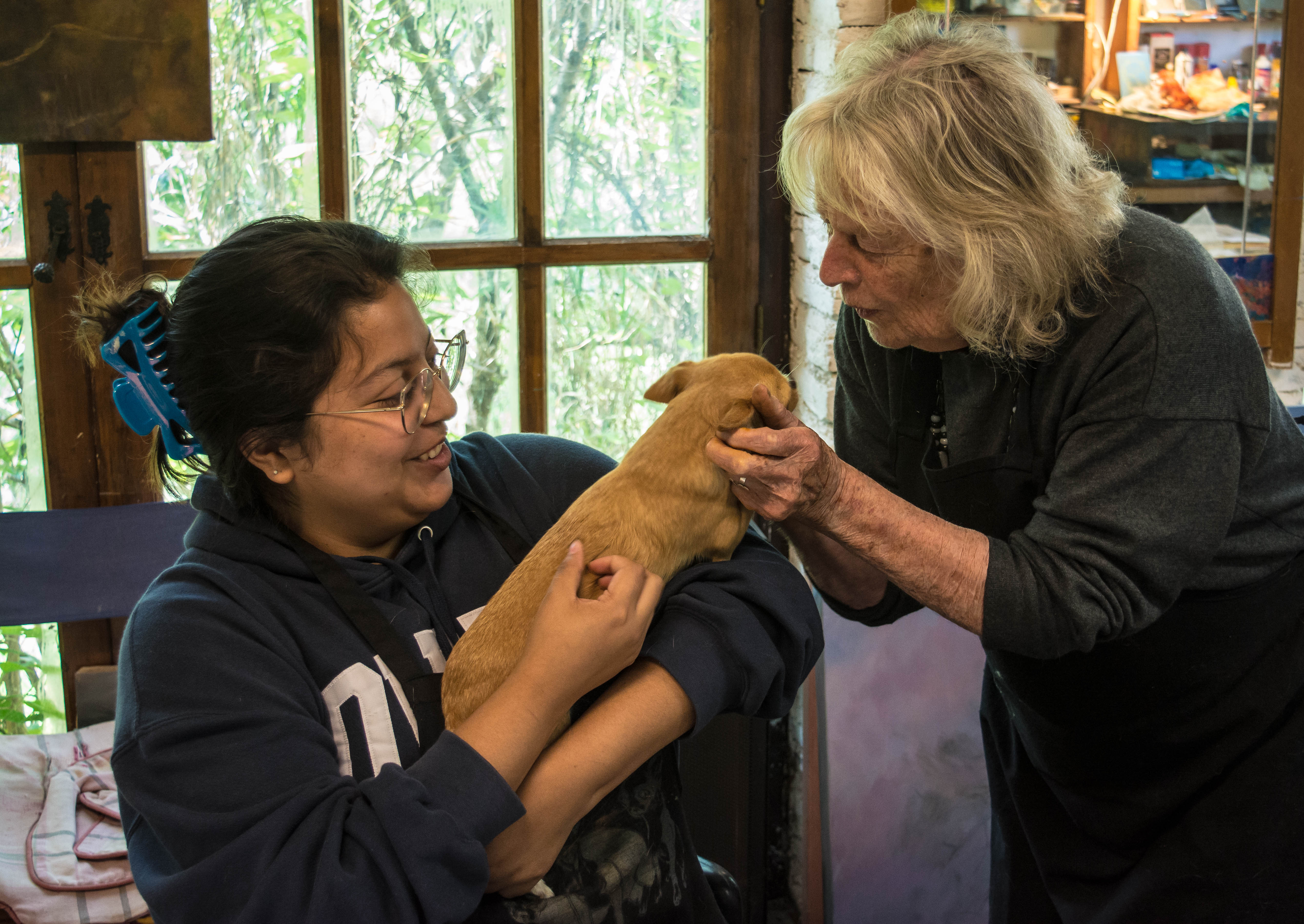
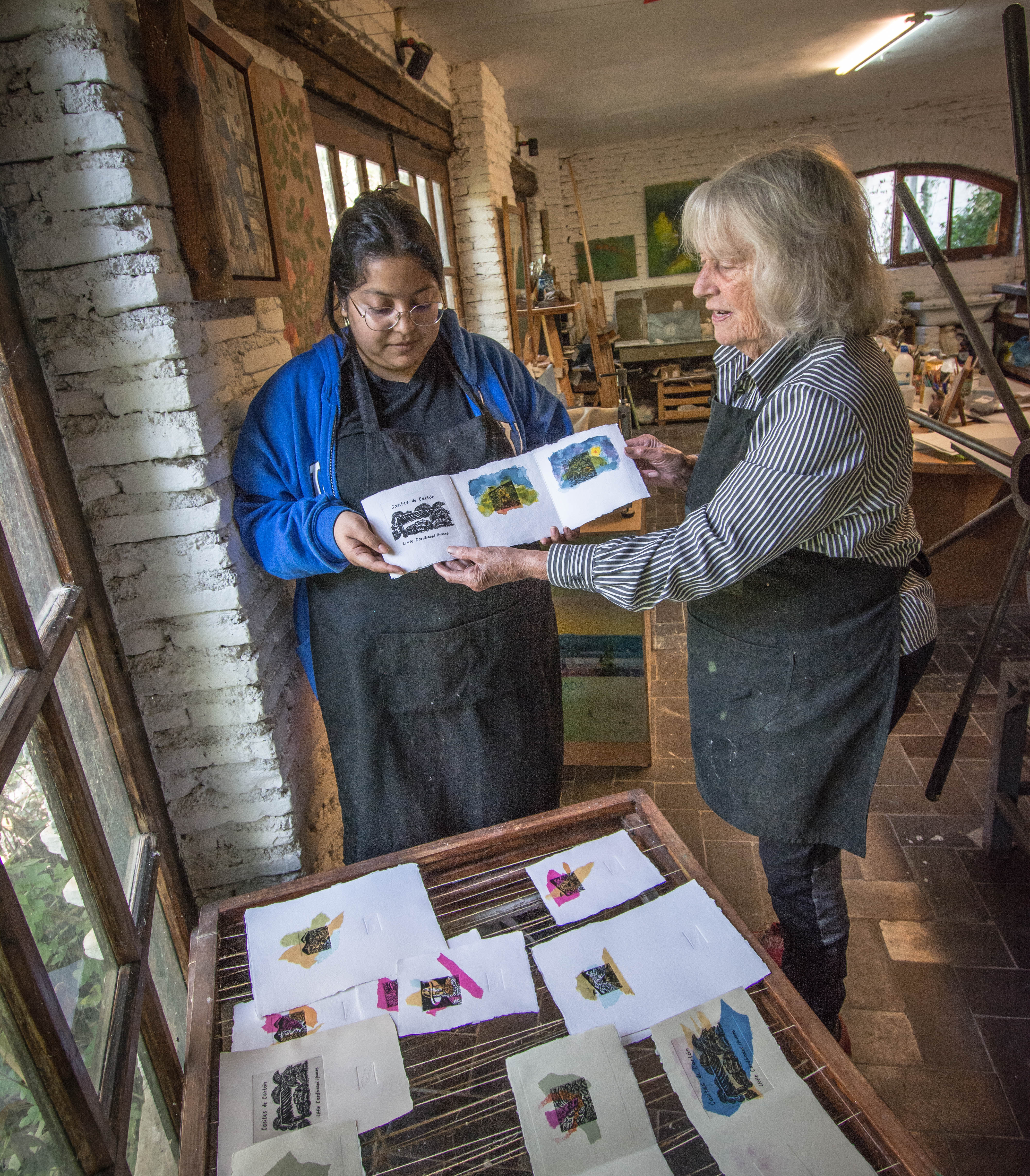
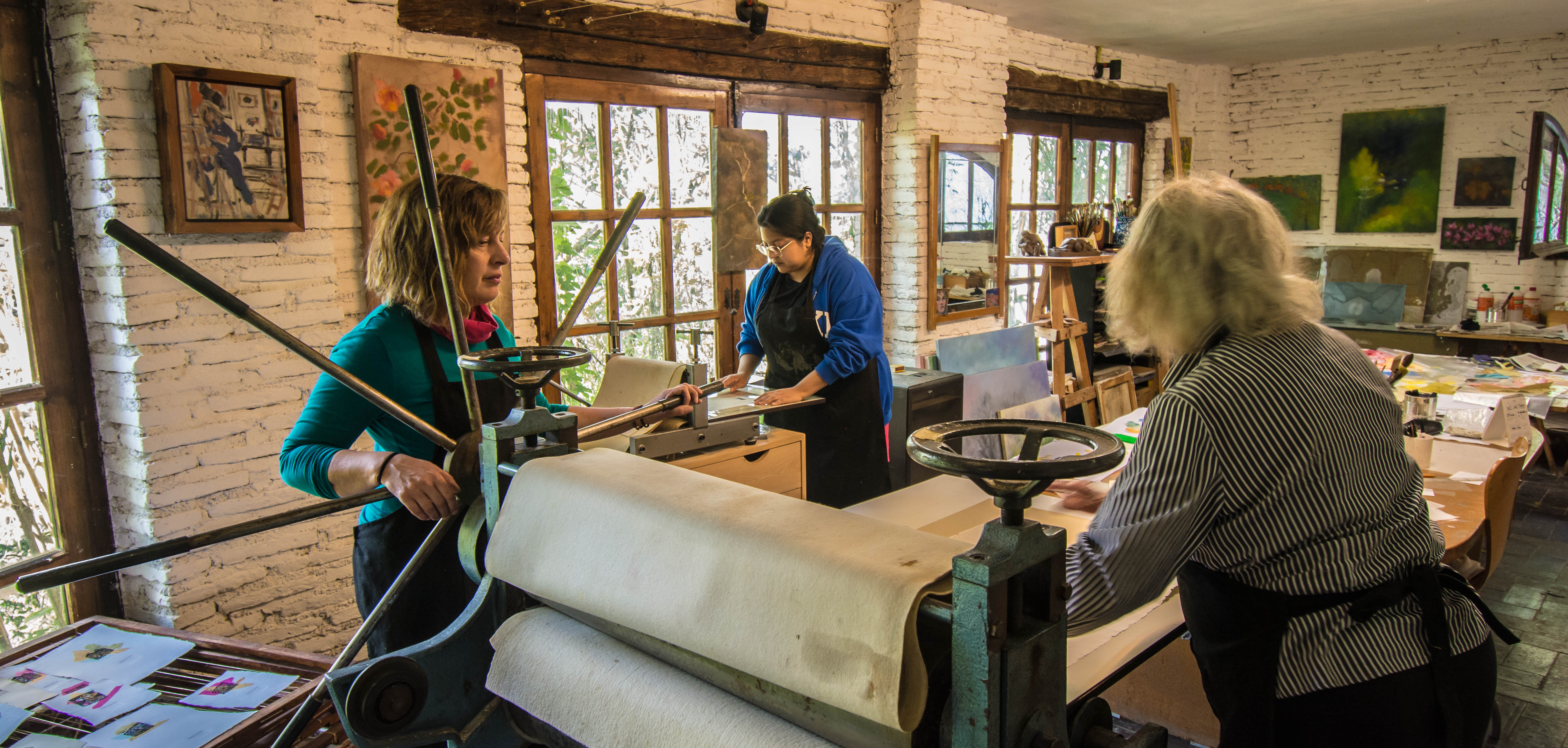
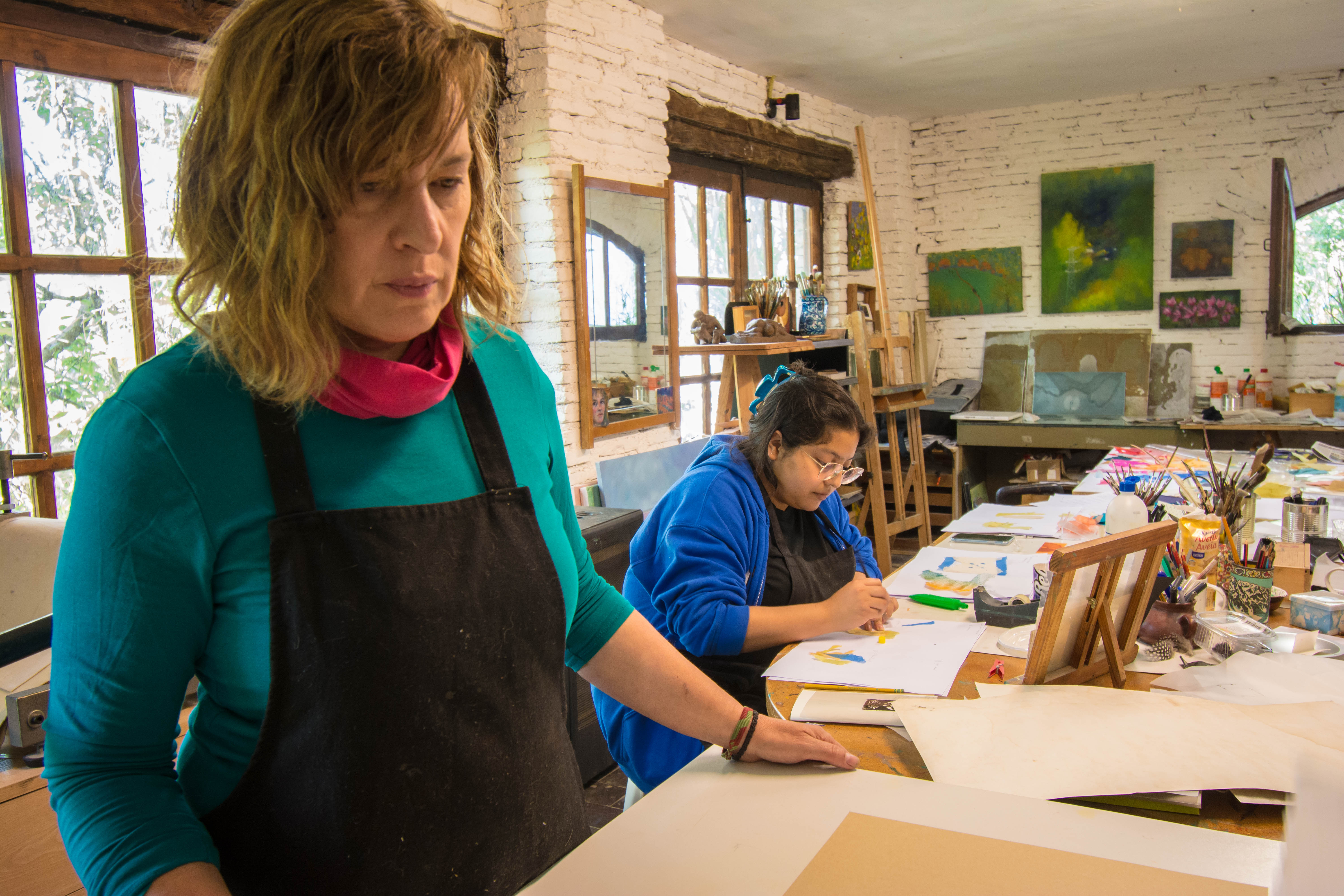
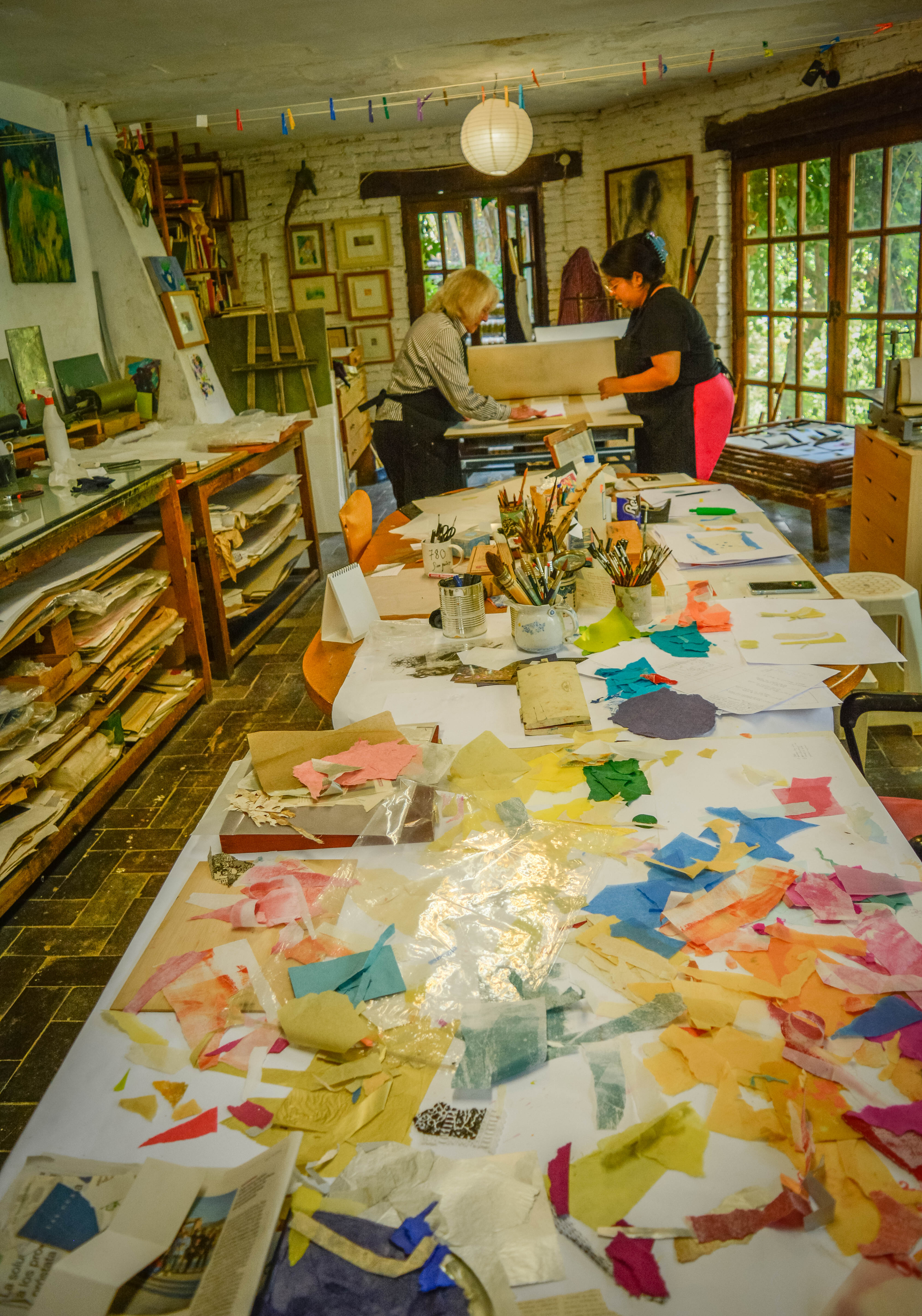
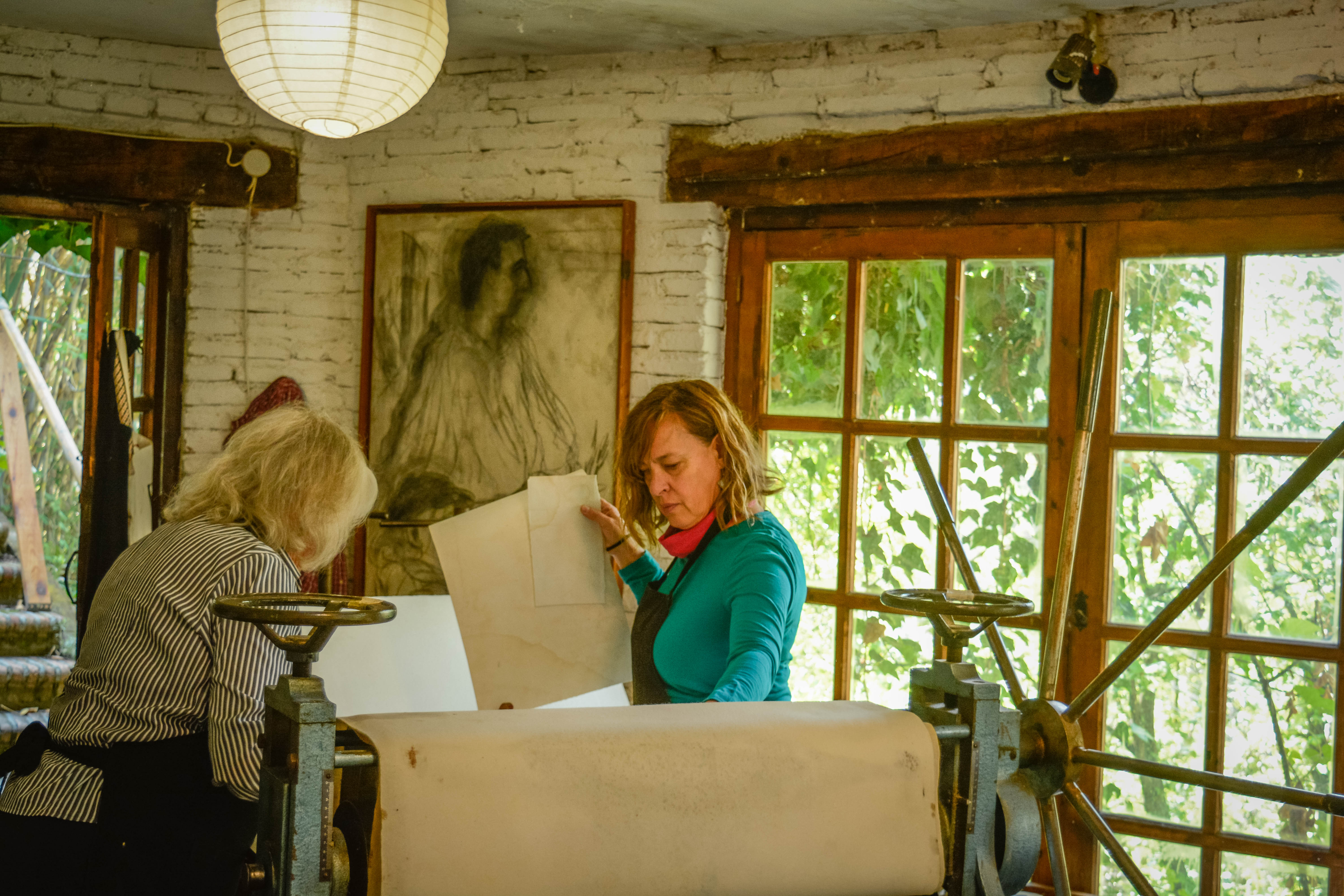
The following morning, Monday, we started work on Rebekah’s artist’s book. What a challenge. The book is little, but the essence is all there. Just over a week later, I asked my long-time helper, María José, to come in and help us print up a few examples of Rebekah’s book, on different papers and in different colors. It won’t be a numbered edition, as each book is different. Each one is a monoprint with hand-written captions. The little, accordion-style book is charming, and moving, and it taught Rebekah a lot about making prints and artist’s books. She’s taking the plates with her and can pull an edition of it whenever she likes.
And I had the privilege of accompanying an exceptional young artist on her first steps in printmaking. The talent scouts from Duke knew what they were doing in Louisiana.
Here’s Mike’s pictures:










Thanks for commenting and sharing.




 Printmaking Courses in Spain